The Origin and Development of Road Sweepers: The Clean Revolution from Human to Mechanized
The birth of road sweepers is closely related to the development of urban civilization. With the acceleration of urbanization after the Industrial Revolution, street cleaning gradually evolved from simple manual labor to mechanized operations, ultimately giving birth to the embryonic form of modern road sweepers.
1、 Background of origin: Urbanization drives the demand for cleaning
Before the 19th century, the cleaning of urban streets mainly depended on manpower, using brooms, shovel and other tools to clean up garbage and dust. After the Industrial Revolution, the urban scale of European and American countries rapidly expanded, and the extensive use of coal fuel led to serious dust accumulation on the streets. The popularization of carriage transportation also caused the accumulation of feces, straw and other debris. Traditional manual cleaning was inefficient and labor-intensive, and the demand for mechanized cleaning was urgent.

2、 Exploration of Early Mechanical Cleaning (mid-19th Century)
(1). Attempt at manual mechanical devices
In the 1830s, French inventors were the first to design a manual cart with a rotating brush, which was manually pushed to rotate and sweep garbage into a dustbin. This type of device, although not completely detached from human labor, is the first to put the concept of "mechanical cleaning" into practice.
(2). The birth of steam powered street sweepers
In 1849, John P. Hammond, an engineer from Philadelphia, obtained the first patent for a steam powered road sweeper. The device is driven by a steam engine and drives the front rotating brush through gear transmission to sweep garbage towards the collection slots on both sides, which are then regularly cleaned by workers. Despite its large size and complex operation, it marked the beginning of mechanized road sweepers.
(3). The popularization of horse drawn road sweepers
In the late 19th century, more practical horse drawn sweepers were promoted in Europe and the United States. These vehicles are equipped with adjustable height brushes and enclosed dust collection boxes, which are pulled forward by horses. The brushes rotate through mechanical transmission of the wheels, without the need for additional power units.

3、 The Evolution and Technological Iteration of Power Systems (20th Century)
(1). The rise of internal combustion engines and electric road sweepers (early 20th century)
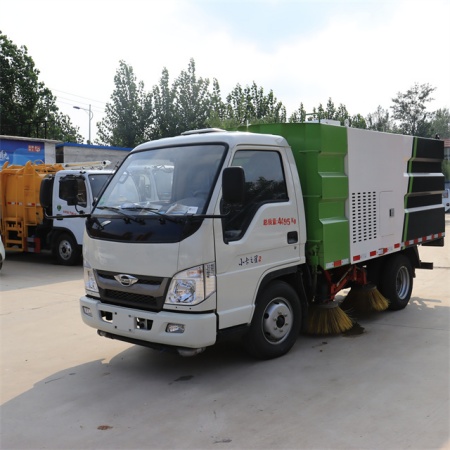
At the beginning of the 20th century, the maturity of internal combustion engine technology propelled street sweepers into the era of motorization. In 1911, American manufacturers launched the first gasoline powered sweeper, which integrated an engine, transmission system, and enclosed dustbin, without relying on animal power. At the same time, electric road sweepers were also introduced in Europe, suitable for use in cities with well-developed power infrastructure, with the advantages of low noise and no exhaust emissions.
(2). Functional integration and specialized design (1950s to 1980s)
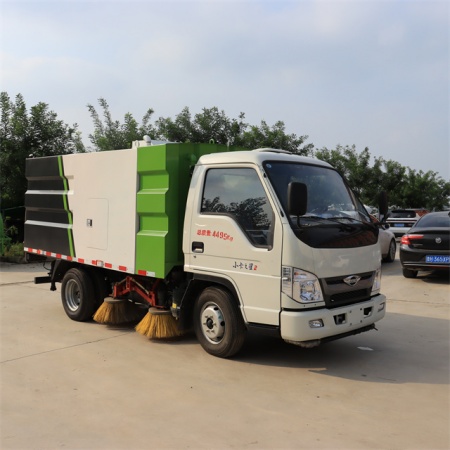
The road sweeper has begun to integrate the "cleaning+vacuuming" function: the front rotating brush sweeps the garbage towards the middle, and the middle vacuuming device sucks dust and debris into the large capacity garbage bin through the fan, solving the problem of secondary dust caused by simple cleaning. At the same time, the addition of a sprinkler system further suppresses dust and improves cleaning efficiency.
(3). Environmental protection and intelligent upgrading (21st century present)
With the increasing awareness of environmental protection, electric and hybrid road sweepers are gradually replacing traditional fuel vehicles to reduce carbon emissions. In recent years, the application of the Internet of Things and autonomous driving technology has enabled road sweepers to have real-time monitoring, path planning, and remote control functions. Some cities have piloted unmanned road sweepers to achieve 24-hour automated operations.
4、 Key technological breakthroughs and representative inventions
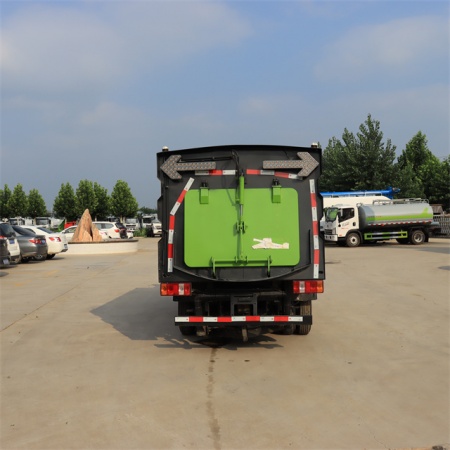
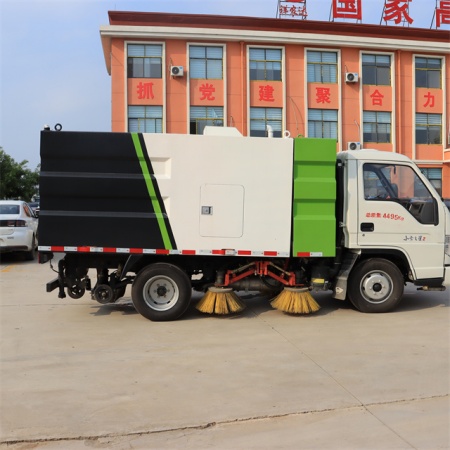
Rotating brush system: Collecting garbage through the mechanical movement of the brush, it is the core component of road sweepers. From early gear transmission to modern hydraulic drive, precision and durability continue to improve.
Vacuum suction and filtration technology: The vacuum suction device introduced in the 1920s, combined with efficient filtering materials, solved the problem of dust pollution, especially suitable for industrial plants and urban main roads.
Modular design: The dust collection box can be quickly loaded and unloaded, and the water tank and power system are separated for easy maintenance and multifunctional expansion.