The key thread of the origin and evolution of washing and sweeping vehicles
1、 Technological sprouts: from manual cleaning to mechanical road sweepers
(1). Early cleaning tools
In the 1950s, urban road cleaning in China mainly relied on human labor, such as the hand push sweeper that appeared in Shanghai in 1952, which could only complete basic garbage collection. At this time, the roads are mostly yellow mud roads, and the cleaning objects are mainly coal slag, with a very low degree of mechanization.
(2). Mechanized transformation of road sweepers
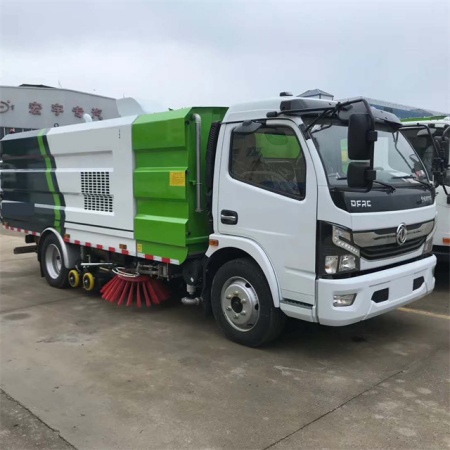
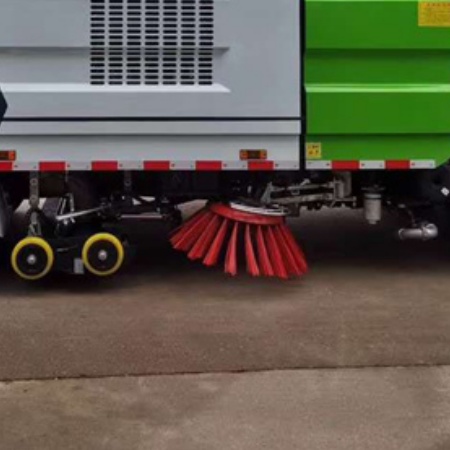
After the reform and opening up, mechanical road sweepers began to become popular. For example, mechanical road sweeping teams have been established in Beijing, Shanghai and other places, using pure mechanical driven road sweeping vehicles to suck garbage into the carriages through rotating brooms, reducing the labor intensity of sanitation workers. However, there are still problems of dust pollution and low cleaning efficiency.

2、 Functional integration: technological breakthrough in washing and sweeping vehicles
(1). Preliminary combination of washing and scanning functions
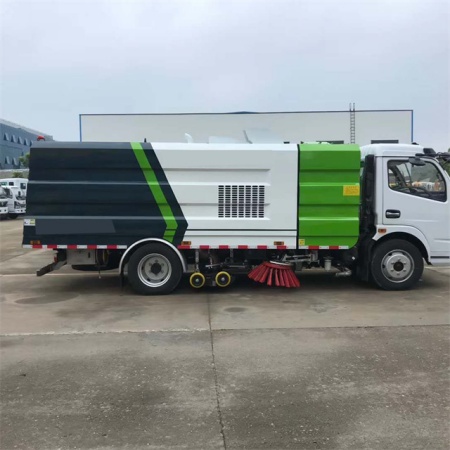
In the 1990s, road sweepers began to integrate sprinkler systems, forming the basic function of "sweeping+washing".
(2). Zoomlion's milestone innovation
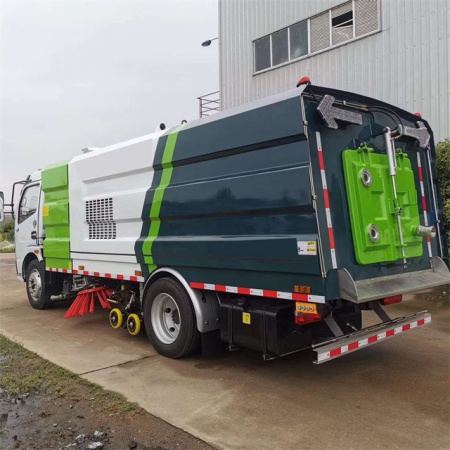
During the 2008 Beijing Olympics, in order to meet the requirements of "no paper scraps and zero dust on the road", the first domestic washing and sweeping vehicle was developed. The vehicle adopts a three in one design of "sweeping brush+high-pressure flushing+suction nozzle", achieving the full process operation of cleaning, flushing, and garbage collection for the first time.

3、 Technological iteration: from traditional fuels to new energy and intelligence
(1). The rise of new energy washing and sweeping vehicles
In 2008, Chinese enterprises launched the first pure electric washing and sweeping vehicle in China, equipped with lithium iron phosphate batteries, achieving "zero emission" operation. Afterwards, the new energy washing and sweeping vehicles continued to optimize in terms of endurance and noise reduction effect.
(2). Exploration of Intelligence and Unmanned Systems
In 2018, Chinese companies launched the world's first unmanned washing and sweeping vehicle, which combines 5G technology to achieve path planning, obstacle recognition, and remote monitoring. In 2023, the front mounted unmanned cleaning and sweeping vehicle V3 of a certain enterprise in China was put into use in the Orange Island Scenic Area in Changsha, marking the entry of cleaning and sweeping vehicles into the era of "intelligent cluster operation".
4、 Global Perspective: Drawing on Foreign Technologies and Localized Innovation
(1). Origin of foreign technology
At the end of the 19th century, Britain invented the first horse drawn sweeper; In the 1930s, countries such as Japan, the United States, and Germany began mass producing mechanical road sweepers. In the 1980s, European and American companies were the first to combine high-pressure flushing and cleaning functions, forming the early prototype of washing and sweeping vehicles.
(2). China's technological catch-up and surpassing
In the 1990s, China gradually achieved the localization of washing and sweeping vehicles by introducing European and American technology. In 2014, Hengrun High tech launched the first mass-produced large-scale pure electric cleaning and sweeping vehicle in China, with a range of 200 kilometers, filling the gap in new energy cleaning and sweeping vehicles.
conclusion
The origin of washing and sweeping vehicles is a history of coexistence between environmental sanitation technology and urban civilization. The development trajectory of China's sanitation industry reflects the transition from labor-intensive to technology driven, from manual road sweepers in 1952 to unmanned cleaning and sweeping vehicles in 2025. In the future, with the deepening of new energy and intelligent technology, washing and sweeping vehicles will become the core carrier of "low-carbon and clean" cities, providing Chinese solutions for the development of global environmental sanitation equipment.