How Do You Get Rid of Large Amounts of Food Waste?
Introduction: The Global Challenge of Food Waste Disposal
The question "How do you get rid of large amounts of food waste?" has become increasingly urgent for municipalities, hospitality chains, food processors, and commercial establishments worldwide. With global municipal solid waste generation reaching 2.1 billion tonnes in 2023 and projected to hit 3.8 billion tonnes by 2050 , the need for efficient, hygienic, and sustainable food waste collection solutions has never been more pressing.
For international B2B buyers—whether you manage urban sanitation for a growing city, oversee supply chain sustainability for a hotel group, or operate a large-scale composting facility—the answer lies in specialized infrastructure: the modern kitchen waste truck. This article explores how advanced food waste collection vehicles are transforming the economics and logistics of large-volume organic waste management.
Section 1: Market Context — Why Large-Scale Food Waste Management Matters Now
1.1 The Soaring Market Trajectory
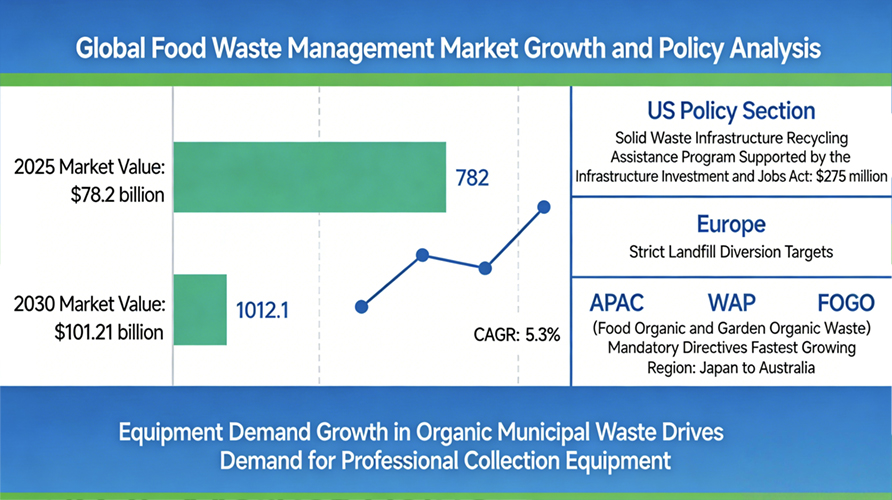
The global food waste management market is experiencing remarkable growth. Valued at $78.2 billion in 2025, it is projected to reach $101.21 billion by 2030, growing at a compound annual growth rate (CAGR) of 5.3% . This expansion is not merely statistical—it reflects fundamental shifts in how governments and corporations approach organic waste.
1.2 Regulatory Drivers Reshaping the Industry
Governments worldwide are implementing stringent policies that directly impact how large food waste generators must operate:
United States: The EPA's Solid Waste Infrastructure for Recycling Grant Program, backed by $275 million in funding through the Infrastructure Investment and Jobs Act, is expanding recycling capacity .
Europe: Stricter landfill diversion targets are forcing commercial operators to seek better collection solutions.
Asia-Pacific: As the fastest-growing region in food waste management , countries from Japan to Australia are rolling out FOGO (Food Organics and Garden Organics) mandates .
1.3 The Organic Waste Tsunami
The rising generation of organic municipal waste—food scraps, yard waste, and other biodegradable materials—directly drives demand for professional collection equipment. When restaurants, hotels, food distributors, and residential programs generate tonnes of organic material daily, the commercial food waste collection system must be robust, reliable, and efficient .
Section 2: The Core Solution — Advanced Kitchen Waste Trucks
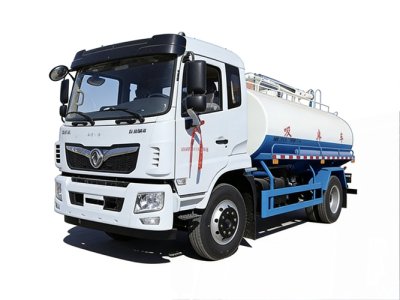
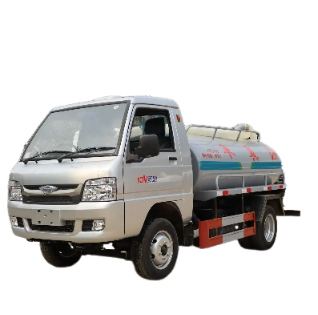
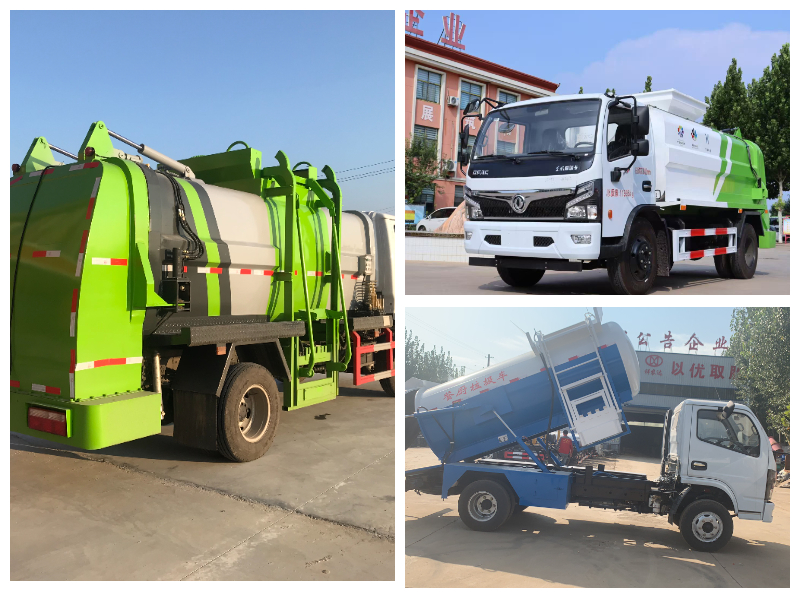
So, how do you get rid of large amounts of food waste at scale? The industrial answer is the specialized kitchen waste truck (also referred to as food waste collection vehicles, organic waste trucks, or commercial food waste collectors).
2.1 Engineering for High-Volume, High-Moisture Waste
Food waste presents unique challenges: it is heavy, wet, acidic, and prone to rapid decomposition. Modern kitchen waste trucks are engineered specifically to handle these demanding characteristics.
Sealed Containment Systems
Leading manufacturers have developed leak-proof designs that are essential for liquid-rich food waste. Advanced rear doors utilize adjustable wedge-type sealing structures that remain watertight even under pressure, preventing the "dump-and-run" leakage that plagues traditional trucks .
Corrosion-Resistant Construction
High-quality kitchen waste trucks feature tanks constructed from tensile steel with premium anti-corrosion coatings. This extends vehicle lifespan and simplifies cleaning—a critical factor when dealing with decomposing organic matter .
2.2 High-Efficiency Collection Mechanisms
Time is money in waste logistics. Modern food waste collection vehicles integrate features that dramatically speed up operations:
Rapid Bin Lifts: Electrically operated bin-lift systems with cycle times under 20 seconds .
Variable Speed Controls: Proportional control valves allow operators to adjust loading speed for different bin sizes and waste densities .
High Compaction Ratios: Specialized compaction cycles increase payload per trip, reducing fuel consumption and labor costs.
2.3 Accessibility: Conquering the "Last Meter"
One of the biggest operational headaches for large-scale collectors is accessing waste sources. Narrow restaurant alleys, underground hotel loading bays, and congested urban streets often defeat standard trucks.
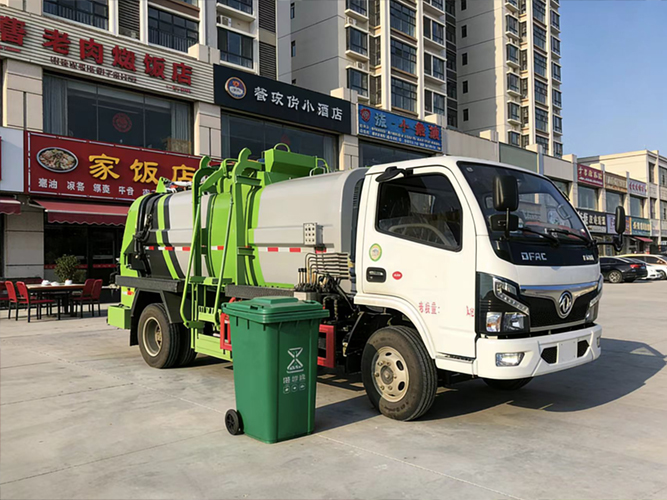
The latest generation of commercial food waste trucks addresses this with compact dimensions:
Narrow Widths: Under 1.9 meters wide for navigating tight lanes .
Low Height Profiles: Approximately 2.4 meters high, allowing entry into underground car parks with height restrictions .
Maneuverability: Tight turning radii that enable operators to reach waste bins where they are actually stored.
Section 3: The Technology Behind Modern Food Waste Collection
3.1 The Shift to Electric and Alternative Fuels
Sustainability is not just about the waste itself—it's also about how we collect it. The industry is rapidly adopting cleaner propulsion systems:
Pure Electric Models: Zero-emission kitchen waste trucks are now available, featuring lithium iron phosphate battery systems, high-efficiency motors, and integrated controllers. These vehicles maintain reliable operation across seasons and weather conditions while eliminating tailpipe emissions .
Fuel Flexibility: For operators not ready for full electrification, systems can be mounted on gasoline, diesel, or CNG chassis, allowing fleet standardization around sustainability goals .
3.2 Smart Integration with Waste Processing
Modern collection vehicles are designed as the first step in a circular economy chain. The food waste preprocessing that occurs at facilities like Agromin's Mountain View plant—which processes 300 tons per day of commercial and residential food waste—depends on receiving material that is already partially managed .
Cleaner collection translates directly to better feedstock for:
Section 4: Application Scenarios — Who Benefits Most?
4.1 Municipalities and Urban Sanitation Departments
Cities face mounting pressure to divert organics from landfills. A fleet of modern kitchen waste trucks enables:
Curbside collection programs for residential food waste
Servicing of public schools and government cafeterias
Compliance with state and national diversion mandates
4.2 Hospitality and Food Service Chains
For hotel groups, restaurant chains, and catering companies, centralized waste management is both an environmental commitment and a cost-control measure. Commercial food waste collection by specialized trucks ensures:
Consistent removal schedules
Reduced pest attraction from proper containment
Documented diversion for sustainability reporting
4.3 Food Processors and Distributors
Manufacturing facilities generate predictable, high-volume waste streams. Direct collection using food waste collection vehicles can:
Replace inefficient dumpster services
Reduce contamination through dedicated food-only collection
Enable waste-to-value partnerships with digesters or composters
4.4 Events and Temporary Venues
Large-scale events produce surges of organic waste. Mobile, high-capacity collection units with integrated bin washing systems can maintain hygiene standards even during peak periods.
Section 5: Product Manufacturing and Application Process
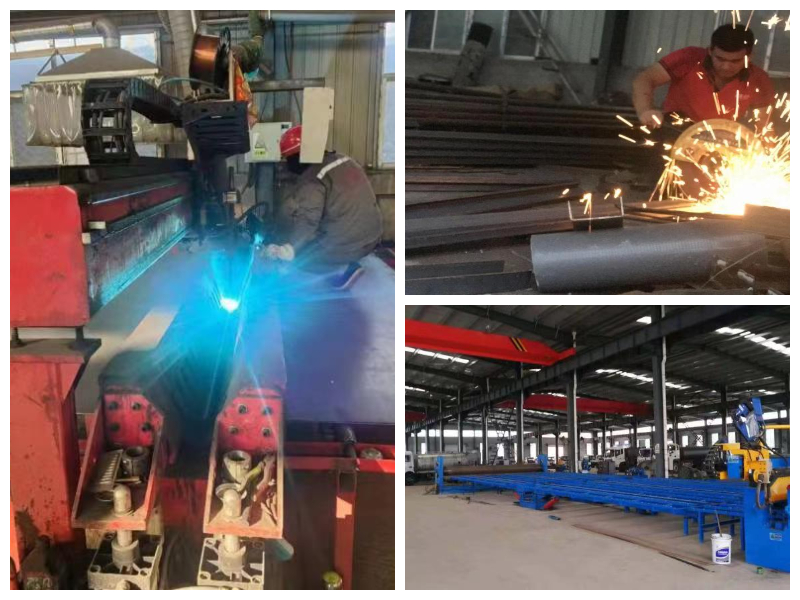
5.1 How Kitchen Waste Trucks Are Built
The manufacturing of a high-quality kitchen waste truck involves several critical stages:
Chassis Selection and Preparation: Whether electric or conventional, the chassis is reinforced to handle the heavy, shifting loads characteristic of liquid food waste.
Tank Fabrication: High-strength steel is cut, formed, and welded into seamless tank bodies. Advanced designs use frameless, arched structures that eliminate stress concentration points .
Corrosion Protection: Multiple layers of food-grade, anti-corrosive coatings are applied, then baked to create a durable, easy-to-clean surface.
Hydraulic System Integration: Precision-engineered hydraulic systems power the bin lift, compaction cycle, and rear door sealing.
Quality Testing: Every vehicle undergoes leak testing, cycle testing, and road testing before delivery.
5.2 The Collection Workflow in Practice
A typical collection operation using a modern kitchen waste truck follows this sequence:
Route Optimization: GPS and fleet management software direct the driver to the most efficient sequence of stops.
Bin Engagement: The operator positions the truck and engages the hydraulic lift with standardized commercial bins.
Contained Transfer: Waste is emptied into the hopper and immediately pulled into the main tank by an auger or push plate, minimizing spillage and odor release.
Compaction: Material is compressed to increase payload, with excess liquids channeled into sealed compartments.
Sanitization (Optional): Some advanced models feature onboard pressure washers that clean bins immediately after emptying, reducing contamination and improving customer satisfaction .
Facility Discharge: At the processing facility, the rear door seals release, and the load is ejected cleanly and completely.
Section 6: Frequently Asked Questions (FAQ)
Q1: What is the typical capacity of a commercial kitchen waste truck?
A: Kitchen waste trucks range in capacity to suit different operational scales. Compact models designed for narrow urban access typically offer around 2.2 cubic meters of effective volume, sufficient for dense collection routes . Larger single-unit vehicles can handle significantly more, while transfer vehicles—like the 6,000-gallon tanker trucks used to transport liquid slurry from preprocessing facilities to digesters—operate at industrial scales . The right capacity depends on your collection density, route length, and distance to processing facilities.
Q2: How do these trucks prevent leaks and odors?
A: Modern food waste collection vehicles employ multiple strategies for leak and odor control. First, fully sealed rear doors with adjustable wedge-lock mechanisms ensure that even liquid contents cannot escape during transport . Second, tank bodies are constructed from welded tensile steel with no weak points. Third, many systems use enclosed auger feeds rather than open hoppers to transfer waste into the main body, minimizing the escape of odors during loading . Some premium models also integrate active odor control systems.
Q3: Can kitchen waste trucks handle packaged or contaminated food waste?
A: While the primary design purpose is source-separated organics, the collection ecosystem increasingly interfaces with depackaging technology. Facilities like the Mountain View plant use advanced processing lines that include shredders, screw presses, and screens to separate food from packaging . Specialized depackaging units can process everything from canned goods to packaged meat waste, using paddle shafts that smash organic material while leaving packaging largely intact for separation . For pure collection applications, it is generally recommended to work with generators to improve source separation quality.
Q4: What is the total cost of ownership compared to traditional refuse trucks?
A: While the initial purchase price of a specialized kitchen waste truck may be comparable to or slightly higher than a general refuse truck, the total cost of ownership often favors the specialized unit. Factors include:
Reduced disposal costs: Higher payloads mean fewer trips to the dump.
Lower maintenance: Corrosion-resistant construction extends component life.
Regulatory compliance: Avoid fines associated with leakage or improper disposal.
Revenue opportunities: Cleaner source-separated organics can command tipping fee discounts or generate biogas revenue.
For a precise calculation, we recommend contacting our sales engineers with your specific operational parameters.
Conclusion: Investing in the Future of Food Waste Management
The question "How do you get rid of large amounts of food waste?" no longer has a one-size-fits-all answer. Today, it requires a strategic approach combining specialized equipment, operational expertise, and sustainability commitment. Kitchen waste trucks have evolved from simple haulers into sophisticated food waste collection vehicles that protect public health, enable circular economies, and reduce the environmental footprint of our food systems.
With the global food waste management market surging toward $101 billion by 2030 , and with organic municipal waste generation accelerating , the time to upgrade your collection infrastructure is now. Whether you need compact vehicles for narrow city streets or high-capacity haulers for industrial food processors, modern kitchen waste trucks deliver the performance, reliability, and sustainability that today's B2B buyers demand.
Ready to Optimize Your Food Waste Collection?
Don't let inefficient collection hold back your sustainability goals. Contact our team of waste management specialists today to discuss your specific requirements. We'll help you select the right kitchen waste truck configuration—whether electric, conventional, or custom—to maximize your operational efficiency and environmental impact.
Request a Quote or Schedule a Technical Consultation
📧 Email: sunna@sdxiangnong.com
📞 Phone: +86 18595205330
Ask about our extended warranties and after-sales support packages, available for all international shipments.