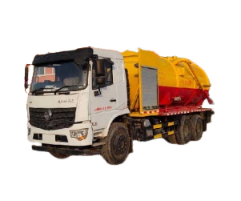
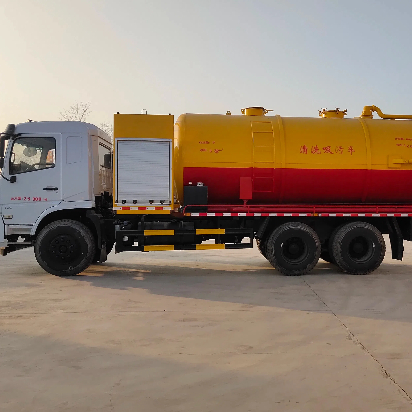
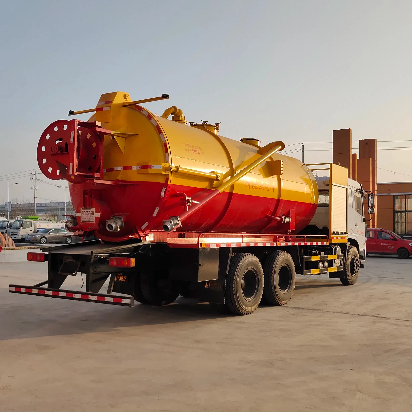
Cleaning Suction Truck
Six Key Advantages of the 12 Cubic Cleaning and Suction Truck
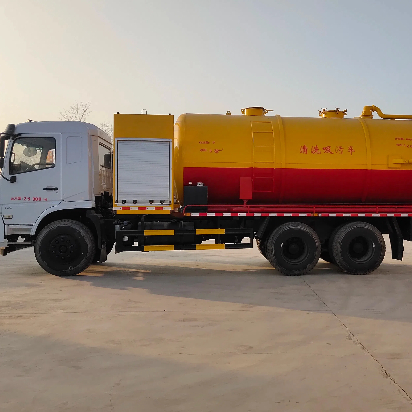
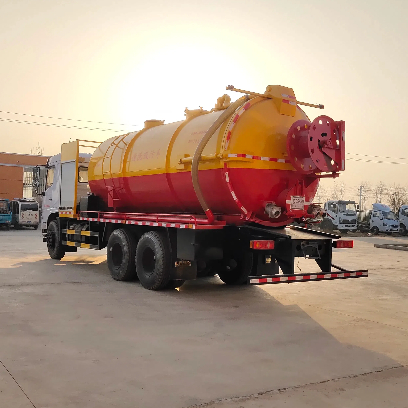
Engineered Dual-Tank System with Clear Separation: Features a fully partitioned tank (5500×2000 mm) with an independent front clean water section (1600mm long, 5.32 m³ effective volume) and a rear sewage section (3900mm long, 12.58 m³ effective volume). This strict physical separation prevents cross-contamination, optimizes weight distribution, and allows dedicated construction for each medium (water vs. liquid waste), ensuring maximum hygiene and system integrity.
High-Volume Capacity with Operational Flexibility: The integrated 12-cubic-class tank body provides substantial storage. The large sewage tank (12.58 m³) minimizes discharge trips, while the dedicated clean water tank (5.32 m³) supports extended high-pressure cleaning, making it ideal for large-scale municipal or industrial pipeline and sewer maintenance.
Powerful Core Vacuum Pump for Demanding Tasks: Equipped with a heavy-duty, industrial-grade vacuum pump as its central device. It generates powerful negative pressure for efficient suction of thick sludge, liquids, and semi-solid debris over long distances and from significant depths, ensuring thorough cleaning.
Integrated Solution for Complete Pipeline Management: Combines high-pressure cleaning (fed by the clean water tank) with powerful vacuum suction, creating an efficient closed-loop workflow. It blasts away blockages and immediately extracts the slurry, providing a complete pipeline dredging and cleaning solution in one vehicle, saving time and resources.
Robust Construction for Enhanced Durability: The tank body is constructed from high-strength, corrosion-resistant materials to withstand vacuum pressure and abrasive waste. This ensures a long service life and reduces maintenance costs related to wear and damage.
Engineered for Reliability in Continuous Operation: The system separation—with independent tanks and a reliably engineered vacuum pump—enables sustained, stable operation. This design reduces thermal and mechanical stress common in combined systems, leading to greater machine reliability and uptime for demanding, back-to-back jobs.
Precautions for pipeline dredging, cleaning and suction truck
The cleaning and suction functions are not used simultaneously,
and the two tanks cannot be fully loaded at the same time.
The suction pump has no suction force, and the suction force of the suction pump becomes weaker:
1. Firstly, self check: Close all ball valves and back covers to hold pressure and check if the pressure values are within the normal range (negative pressure of oil pump: 0.06 value, water circulation pump: 0.06-0.1 value)
2. Check if the oil supply is normal
3. Check if there are any blockages on the filter screen at the inlet of the sewage pump and if it needs to be cleaned.
4. Check whether all ball valves, filling ports, and back covers are tightly closed and whether there is any air leakage.
5. Is the anti overflow valve inside the tank stuck at the inlet and not returning to its original position.
6. Observe whether the suction pump belt is too loose and tighten it.
7. During homework, the tank was filled with sewage and sewage, and the following treatment measures were taken: ① Clean the inlet filter and all inlet pipes from the four-way valve to the overflow valve. ② Clean the four-way valve and the two inlet filters of the pump body. ③ The water circulation pump needs to replace the water supply tank and dirty water inside the pump body (the oil pump needs to remove the pump body to clean the inside of the pump body and replace all the oil inside the pump).
8. The pump has not been fully pumped, and there is no such situation as mentioned above. Possible reasons may include:
① Water circulation: If the service life is too long, the impeller inside the pump body is damaged, or there is sediment inside the pump body, the pump body needs to be disassembled for inspection.
② Oil pump: Prolonged high-speed operation causes the pump body to heat up, internal sliding plates to wear out, or prolonged failure to replace internal oil, resulting in viscous oil.
【Technical parameters of the entire vehicle】 | |||
Product trademark | Xiangnongda brand | Announcement Batch | 336 (Extended) |
Product Name | cleaning and suction truck | Product model | SGW5253GQWF |
Total mass (Kg) | 25000 | Tank volume (m3) | 12.58 |
Rated load capacity (Kg) | 10605,10670 | Dimensions (mm) | 10300×2550×3700 |
Curb weight (Kg) | 14200 | Maximum speed (Km/h) | 89 |
Cab capacity (persons) | 3,2 | Axle load (Kg) | 7000/18000 (two axis group) |
Approach Angle/Departure Angle (degrees) | 23/19 | Front suspension/rear suspension (mm) | 1440/3160 |
remarks | The purpose of this vehicle is to clean and absorb pollutants, with the main specialized devices being vacuum pumps and tanks. The tank size is (straight section length x diameter) (mm): 5500 x 2000, with the front section of the tank being a clear water tank (straight section length 1600mm); The rear section is the sewage tank (with a straight length of 3900mm). Two tanks are independent and cannot be fully loaded at the same time. Use a water tank for cleaning function and a sewage tank for suction function. The effective volume of the sewage tank is 12.58 cubic meters, the medium is liquid waste, and the density is 850 kilograms per cubic meter; The effective volume of the clear water tank is 5.32 cubic meters, the medium is water, and the density is 1000 kilograms per cubic meter. Only using (mm): 4350+1350 wheelbase. Optional tank body style. Optional cab with chassis. The side/rear protective material is Q235, and the connection method is welding. The cross-sectional size of the rear protection is 120 × 60mm, and the height above the ground is 500mm. ABS model/manufacturer: 3631010-C2000/Dongke Knorr Bremse Commercial Vehicle Braking System (Shiyan) Co., Ltd. | ||
【Chassis Technical Parameters】 | |||
Chassis Model | DFV1253GP6DJ | Chassis name | Truck chassis |
Trademark name | Dongfeng brand | manufacturing enterprise | Dongfeng Commercial Vehicle Xinjiang Co., Ltd |
Number of axes | 3 | Number of tires | 10 |
Wheelbase (mm) | 4350+1350,4750+1350,5400+1350,5700+1350,5900+1350,3600+1350 | ||
Tire specifications | 11.00-20 16PR,11.00R20 18PR,12R22.5 18PR,295/80R22.5 18PR | ||
Number of steel plate springs | 9/10,8/13,9/13 | Front wheel base (mm) | 1940,1965,1980,2020 |
Fuel type | diesel oil | Rear wheel base (mm) | 1860/1860 |
Emission standards | GB17691-2018 National VI | ||
Engine model | Engine manufacturing enterprises | Emissions(ml) | Power (Kw) |
D6.7NS6B320 D6.7NS6B260 D6.7NS6B230 B6.2NS6B260 B6.2NS6B230 YCS06270-60 YCS06245-60 YCS06245-60A YCK08300-60 | Dongfeng Cummins Engine Co., Ltd Dongfeng Cummins Engine Co., Ltd Dongfeng Cummins Engine Co., Ltd Dongfeng Cummins Engine Co., Ltd Dongfeng Cummins Engine Co., Ltd Guangxi Yuchai Machinery Co., Ltd Guangxi Yuchai Machinery Co., Ltd Guangxi Yuchai Machinery Co., Ltd Guangxi Yuchai Machinery Co., Ltd | 6700 6700 6700 6200 6200 6234 6234 6234 7698 | 231 191 169 191 169 199 180 180 221 |
High pressure without pressure, high pressure pump shaking:
1. Check if the connection between the water tank and the pump body is unobstructed.
2. Check if the inlet filter is clogged.
3. There is air inside the pump body. Simply remove the nozzle to exhaust the air, or you can add fuel to the valve to accelerate the exhaust.
4. Check if the pressure gauge is damaged and not displaying.
5. Check if the high-pressure three-way valve is damaged and causing pressure relief, resulting in weak high-pressure pressurization.
6. If the high-pressure pump leaks water, check the water seal of the high-pressure pump and replace it in a timely manner.
Frequently Asked Questions (FAQ): 12 Cubic Cleaning and Suction Truck
1. What is the core design principle behind the dual-tank system?
Our truck features a fully partitioned, integrated tank with a dedicated clean water section (5.32 m³) and a separate sewage section (12.58 m³). This strict physical separation is designed to prevent any cross-contamination between media, ensure optimal weight distribution and vehicle stability, and allow for material or coating specifications tailored to each medium's specific properties (e.g., corrosion resistance).
2. Can both tanks be used and filled to maximum capacity at the same time?
No. The two tanks are designed for independent operation and cannot be fully loaded simultaneously. This is a critical safety and engineering feature to maintain proper axle weight distribution, vehicle stability, and handling performance. The system is optimized for sequential use: high-pressure cleaning followed by vacuum suction of the waste slurry.
3. What are the primary applications for this high-volume 12 cubic truck?
This truck is engineered for large-scale municipal sewer maintenance, industrial waste management at factories or ports, septic tank servicing for commercial complexes, and extensive pipeline dredging and cleaning projects. Its high capacity makes it ideal for routes or sites where reducing the frequency of trips to disposal facilities is a key priority.
4. What type of pump powers the vacuum system, and what is its performance?
The vehicle is equipped with a heavy-duty, industrial-grade vacuum pump as its core component. This pump generates powerful negative pressure (vacuum), enabling efficient suction of liquid waste, thick sludge, and semi-solid debris over considerable horizontal distances and vertical lift heights, ensuring rapid and thorough cleaning.
5. What are the key benefits of the integrated cleaning-and-suction design?
The integration creates an efficient, closed-loop workflow. The high-pressure cleaning system (using clean water) can dislodge blockages and debris, and the powerful vacuum system can immediately extract the resulting slurry. This all-in-one solution increases job site efficiency, saves time, and reduces the need for multiple pieces of equipment.
6. Is the chassis and configuration customizable?
While the core tank and pump system follows a standard high-performance design, we offer a degree of customization. Options can include choice of chassis brand (subject to availability), specific pump power ratings, additional safety features, specialized hose and tool configurations, and telemetry systems for fleet management.
7. What materials are used for tank construction, and how is durability ensured?
The tank is constructed from high-strength, corrosion-resistant materials, often including specialized internal coatings or treatments. This robust construction is engineered to withstand the significant stresses of vacuum/pressure cycles and the abrasive nature of sewage and industrial waste, ensuring long-term durability and reduced maintenance.
8. What kind of operational training or support is provided?
We provide comprehensive operator manuals and can arrange on-site or virtual operational training upon request. Our support covers safe startup/shutdown procedures, routine maintenance checks, efficient job cycle management, and basic troubleshooting to ensure optimal and safe vehicle operation.
9. What is the typical lead time for delivery?
Lead times vary based on order specifications, customization requirements, and production schedules. However, we maintain an efficient production and supply chain for key components. Contact our sales team with your specific requirements for an accurate delivery timeline.
10. What after-sales service and warranty are included?
We offer a standard manufacturer's warranty covering major components (tank, pump, chassis) against material and workmanship defects. Our after-sales service includes access to technical documentation, spare parts support, and remote troubleshooting assistance. Service partnerships in various regions can be discussed to facilitate local support.