What are the uses of a sprinkler truck?
Beyond Watering Roads: The Multifunctional Roles of Modern Sprinkler Trucks in Global Industries
In the global landscape of industrial and municipal equipment, the sprinkler truck, often perceived as a basic utility vehicle, has evolved into a sophisticated, multifunctional asset crucial for operational efficiency, environmental compliance, and public safety. For international B2B buyers in sectors ranging from municipal management and construction to mining and agriculture, understanding the full spectrum of sprinkler truck uses is key to making informed procurement decisions. This article delves deep into the primary and advanced applications of these versatile vehicles, supported by market analysis, technological insights, and future trends.
1. Core Applications: What Are the Primary Uses of a Sprinkler Truck?
The fundamental question, "What are the uses of a sprinkler truck?" reveals a breadth of functionality far beyond simple street washing. Here are the core applications of sprinkler trucks:
1.1. Municipal Services & Urban Management
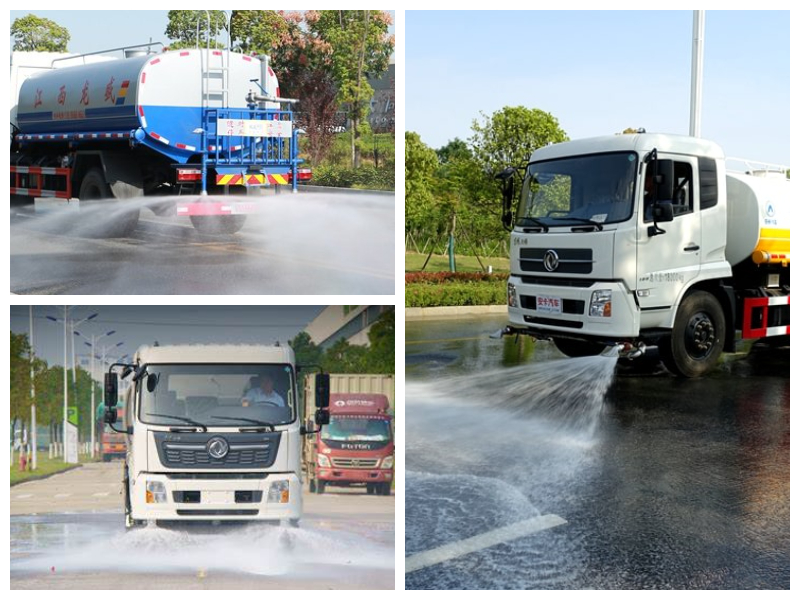
Road Dust Suppression and Cleaning: This remains the most visible use of sprinkler trucks. Regular spraying on unpaved or construction-adjacent roads effectively binds dust particles, improving air quality and visibility, which is a growing concern for cities worldwide.
Street Washing and Sanitation: High-pressure water systems help flush away debris, grime, and residues from paved surfaces, maintaining urban hygiene and aesthetic appeal.
Landscape Irrigation and Greenery Maintenance: Municipalities use sprinkler trucks to water public parks, roadside greenery, and newly planted trees, especially during dry seasons or in arid regions.
1.2. Construction, Mining, and Industrial Sites
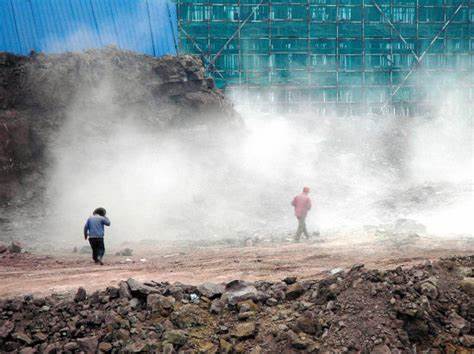
Dust Control on Construction Sites: A critical application for construction sprinkler trucks. Continuous dust suppression is essential for worker health, compliance with environmental regulations (like EPA or EU directives), and minimizing community impact.
Soil Compaction and Stabilization: In road construction and earthworks, water is sprayed to achieve optimal moisture content for proper soil compaction, ensuring a stable foundation.
Mine Site Dust Management: In open-pit mines, sprinkler trucks are indispensable for controlling hazardous dust from drilling, blasting, and hauling operations, protecting equipment and personnel.
1.3. Emergency and Specialized Functions
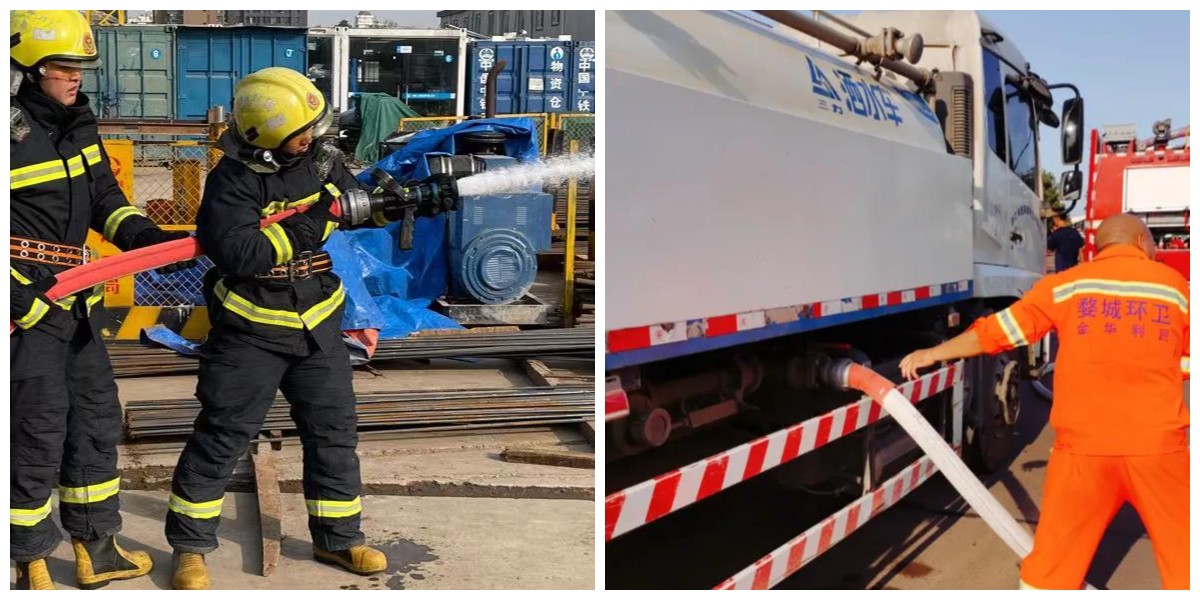
Firefighting Support: While not a replacement for dedicated fire engines, sprinkler trucks with firefighting capabilities serve as crucial support units. They can transport large volumes of water to remote fire scenes, create firebreaks by wetting surrounding areas, and assist in cooling operations.
Pest and Odor Control: By adding specific agents to the water tank, these trucks can be used for disinfecting public areas, controlling mosquito populations, or neutralizing unpleasant odors.
De-icing and Anti-icing (in colder climates): Some regions deploy sprinkler trucks to spread brine solutions on roads before snowfalls to prevent ice formation.
2. Market Outlook and Key Trends Driving Demand
The global sprinkler truck market is experiencing steady growth, projected to advance at a CAGR of approximately 3-5% over the next five years. This growth is fueled by:
Stringent Environmental Regulations: Governments worldwide are imposing stricter limits on airborne particulate matter (PM2.5, PM10), directly increasing demand for effective dust suppression equipment like advanced sprinkler trucks.
Rapid Urbanization and Infrastructure Development: Mega-projects in Asia-Pacific, the Middle East, and Africa require robust dust control and site management solutions.
Technological Integration: The shift towards smart, efficient, and multi-purpose vehicles is a dominant trend.
3. Technological Enhancements: The Rise of Integrated Systems
Modern sprinkler truck manufacturers are integrating advanced technologies to enhance value:
Intelligent Spray Control Systems: Featuring automated flow control, GPS-guided zone spraying, and remote monitoring to optimize water usage and coverage.
High-Pressure, Low-Volume Systems: These systems create finer water droplets for better dust adhesion while conserving significant amounts of water—a critical factor in arid regions.
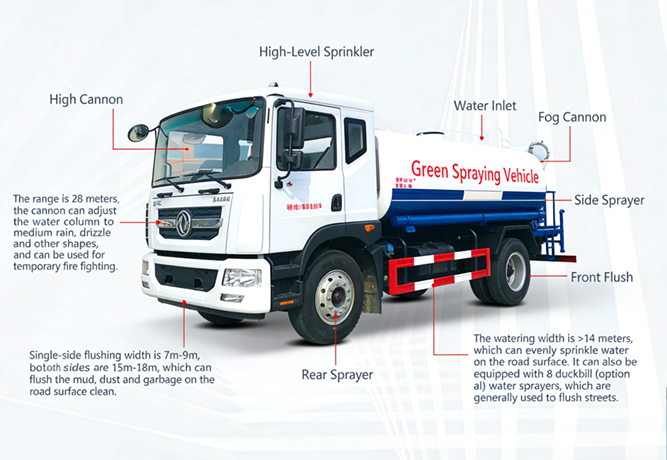
Optional Fog Cannon Attachment: This is a game-changer. An optional fog cannon (or dust suppression cannon) can be mounted on the truck. It uses high-pressure pumps to atomize water into an ultra-fine mist, projecting it over extremely long distances (up to 100 meters or more). This is ideal for targeting dust sources in large, open areas like stockpiles, demolition sites, or ports without needing to drive the truck directly into the zone.
Robust Chassis and Corrosion-Resistant Tanks: Built on reliable truck chassis (like Dongfeng, ISUZU, FAW) with tanks made from stainless steel or coated carbon steel for longevity.
3.1. Brief Overview of Manufacturing and Customization
A standard sprinkler truck production process involves mounting a water tank, high-pressure pump, piping network, rear/spray nozzles, and control valves onto a qualified chassis. For B2B buyers, the emphasis is on customization. Buyers can specify tank capacity (from 5,000 to 20,000 liters), pump pressure, nozzle types, the inclusion of a front-mounted water gun, and most importantly, the integration of an optional fog cannon system for superior dust control.
4. FAQs for B2B Buyers
Q1: What is the main difference between a standard sprinkler truck and one with a fog cannon?
A: A standard truck uses gravity-fed or pump-fed side/rear nozzles for ground-level coverage. A truck with an optional fog cannon has a dedicated, remotely controlled cannon that projects a fine mist curtain over long ranges and heights, making it far more effective for targeted, long-distance dust suppression at fixed sources.
Q2: What key specifications should I prioritize when purchasing for mining operations?
A: Focus on: 1) High tank capacity for longer operation without refilling, 2) Off-road capable chassis with 4x4 drive, 3) High-pressure pump for effective dust binding, and 4) The inclusion of an optional fog cannon to cover vast and uneven terrain.
Q3: How can I ensure the sprinkler truck complies with my country's environmental standards?
A: Provide your manufacturer or supplier with the specific regulatory codes or particulate emission limits. Reputable manufacturers can recommend configurations (like specific nozzle sizes or fog cannon micron ratings) and provide supporting test data to ensure compliance.
Q4: What are the common after-sales services and spare parts availability?
A: Ensure your supplier offers comprehensive manuals, video guides, and readily available spare parts kits (including pumps, nozzles, seals). Ask about warranty terms, availability of local technical support, and training for your operators.
For B2B buyers navigating the market for multifunctional sprinkler trucks, the decision extends beyond basic price comparison. It involves a strategic assessment of primary and secondary sprinkler truck uses, regulatory needs, and the value of technological upgrades like the optional fog cannon.
Ready to Source Your Customized Sprinkler Truck Solution?
As a professional manufacturer with extensive experience in the global market, we specialize in engineering robust, efficient, and compliant sprinkler trucks tailored to your specific industry challenges—from municipal dust control to intensive mine site operations. Contact our technical sales team today for a detailed consultation, customized quotation, and to discuss how an integrated fog cannon system can maximize your ROI. Let us help you build a cleaner, safer, and more efficient operational environment.