What is in a Mini Fire Truck?
Executive Summary: The Rise of the Compact Firefighting Powerhouse
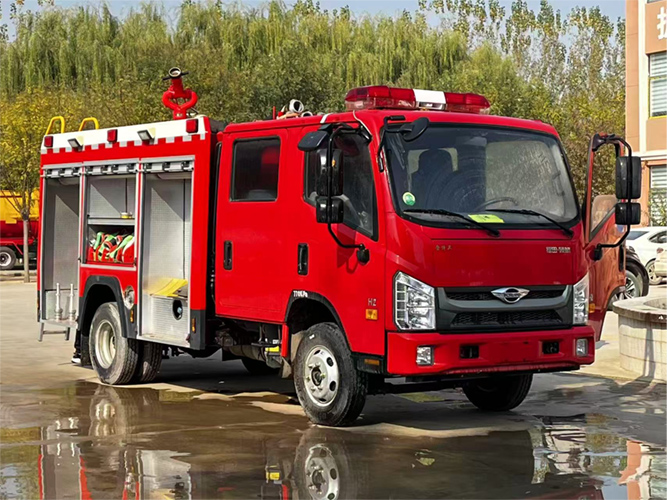
In today’s rapidly urbanizing world, efficient and agile emergency response is paramount. Enter the mini firetruck – a highly specialized, compact firefighting vehicle engineered to deliver maximum capability in confined spaces. Far from a simple downsized version of its traditional counterparts, a modern compact firefighting vehicle represents a sophisticated integration of power, technology, and strategic design. This article serves as an authoritative guide for B2B buyers—municipal procurement officers, industrial safety managers, and fleet operators—exploring the critical components, market drivers, and technological advancements that define this essential piece of specialized fire and rescue equipment.
Market Context: Why Mini Fire Trucks Are in High Demand
The global market for compact emergency vehicles is experiencing significant growth, driven by several key factors. Aging urban infrastructures with narrow streets, dense historical districts, and sprawling industrial complexes with internal roadways often prohibit access for full-sized fire engines. Simultaneously, airports, large warehouses, and specialized facilities like data centers require rapid initial attack capabilities on-site. According to recent industry analyses, the demand for small fire truck for sale is projected to grow steadily, particularly in regions undergoing rapid development and in industries prioritizing bespoke risk management solutions. The trend is clear: flexibility, rapid deployment, and cost-effective operational readiness are no longer niceties but necessities.
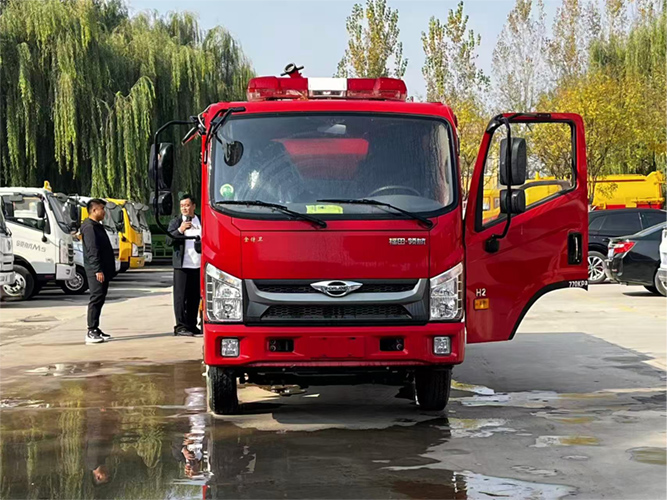
Core Components: Deconstructing a Modern Mini Fire Truck
Understanding what comprises a mini firetruck is crucial for making an informed procurement decision. Each component is selected and integrated to balance performance, size, and reliability.
1. Chassis and Powertrain: The Agile Foundation
Unlike commercial vehicles adapted for firefighting, professional mini fire trucks are often built on rugged, purpose-selected or custom-designed chassis. Key features include:
4x4 or All-Wheel Drive: For off-road and adverse terrain capability in industrial yards or rural settings.
High-Power, Low-Emissions Engine: Typically diesel, complying with international emission standards (Euro VI, EPA Tier 4), providing the necessary torque to run pumps and systems while on the move.
Compact Dimensions: Overall width and length are meticulously designed to meet specific access criteria, such as navigating 2.5-meter alleyways or standard industrial door frames.
2. Firefighting Systems: The Heart of the Vehicle
This is where mission-critical technology resides. A standard configuration for a compact rapid intervention vehicle (RIV) includes:
Water Pump System: A high-pressure, often multi-stage, centrifugal pump (with capacities ranging from 500 to 2000+ LPM) powered by a separate engine or a PTO from the main chassis.
Water Tank: A corrosion-resistant polyethylene or stainless-steel tank, typically between 1,000 to 3,000 liters. Baffles are integrated to manage liquid surge.
Foam System: An integrated foam-proportioning system (around 3-6% foam concentrate) for combating flammable liquid fires is a common and vital option.
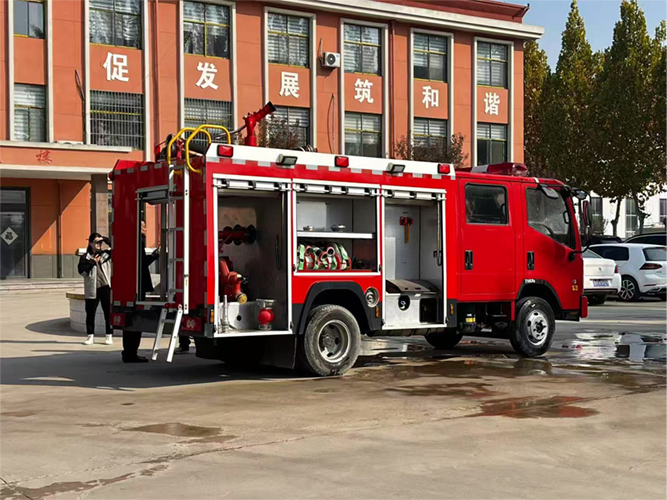
Hose Reels and Equipment Storage: Front-mounted or side-accessed electric reels with high-pressure hoses, complemented by strategically organized compartments for nozzles, breathing apparatus (BA), forcible entry tools, and medical first-response kits.
3. Specialized Equipment and Technology Integration
Modern units transcend basic firefighting. They are mobile command and rescue hubs:
Lighting and Communication: LED light towers, scene lighting, and integrated warning systems. Robust VHF/UHF radio systems and data terminals for connectivity with central command.
Rescue Tools: Space-efficient storage for hydraulic cutters and spreaders (jaws of life), chain saws, and thermal imaging cameras.
Safety and Customization: Roll-over protection structures (ROPS), ergonomic cabin design, and extensive options for customized fire apparatus to suit specific hazards like chemical, forest, or airport rescue.
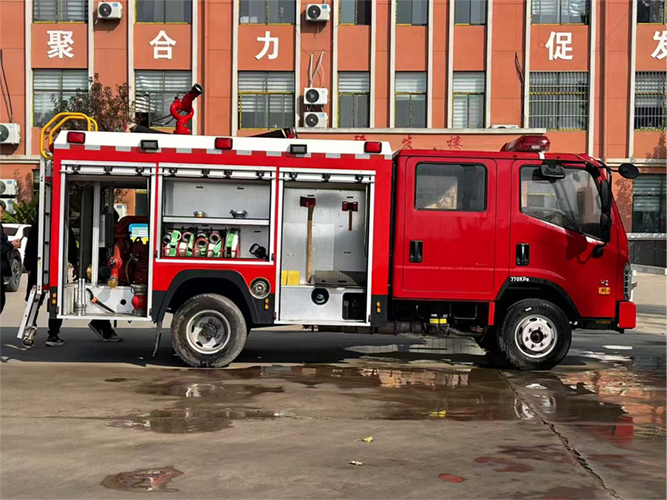
Manufacturing & Application: From Design to Deployment
The creation of a mini pumper fire truck is a collaborative, precision process. It begins with a deep-needs analysis with the client, followed by engineering design using CAD software to optimize component layout and weight distribution. Chassis are prepared (shortened, reinforced), and bodies are fabricated from aluminum or galvanized steel for strength and weight savings. The complex phase of “marrying” the body to the chassis follows, where all firefighting systems, plumbing, electrical wiring, and equipment are installed and integrated. Rigorous testing of every system—pump performance, pressure integrity, electrical function—is conducted before final delivery.
In application, these vehicles serve as first response fire units in diverse scenarios: leading firefighting efforts in historic city centers before larger engines arrive, providing dedicated coverage within manufacturing plants, patrolling forest service roads, or serving as rapid intervention vehicles at motorsports events. Their value lies in their ability to arrive first, assess, and begin containment, dramatically improving outcomes.
Frequently Asked Questions (FAQ) for B2B Buyers
Q1: What is the typical price range for a well-equipped mini fire truck, and what are the main cost drivers?
A1: Prices vary significantly based on specifications, ranging from approximately $80,000 for a basic unit to over $250,000 for a fully customized, technology-dense vehicle. Major cost factors include the chassis brand/type, pump capacity and certification, tank size, material quality (e.g., stainless steel vs. aluminum body), and the level of specialized equipment (e.g., compressed air foam systems, advanced rescue tools).
Q2: How do I ensure the vehicle meets the safety and compliance standards in my country or region?
A2: Reputable manufacturers design vehicles to meet or exceed key international standards such as NFPA (National Fire Protection Association) in the Americas, EN standards in Europe, or CCC in China. It is imperative to specify your required certification during the inquiry phase. A trustworthy supplier will provide detailed documentation and certification proofs for core components like pumps, pressure vessels, and electrical systems.
Q3: Can the truck be customized for very specific industrial risks, such as chemical fires or airport crashes?
A3: Absolutely. Leading manufacturers specialize in customized fire apparatus. For chemical plants, you might specify dry chemical powder systems, acid-resistant coatings, and specialized detection equipment. For airport use, compliance with ICAO/Adex levels for firefighting capability, high-volume turret monitors, and undercarriage spray systems are typical customizations. The design process should start with a thorough hazard analysis.
Q4: What does the after-sales support and parts availability look like for international buyers?
A4: This is a critical consideration. Partner with a manufacturer that offers a clear global after-sales support framework. Inquire about the availability of comprehensive technical documentation in English, online parts catalogs, regional service partners or warehouses, and training programs for your mechanics. Warranty terms and remote diagnostic support capabilities are also key indicators of a provider’s commitment to long-term partnership.
Conclusion: Your Strategic Partner in Compact Firefighting
A modern mini firetruck is a testament to intelligent engineering—where every component, from the chassis to the hose nozzle, is purposefully selected to create a versatile, powerful, and indispensable asset for modern emergency response. For B2B buyers, the decision extends beyond the vehicle itself to selecting a manufacturing partner with the engineering prowess, certification expertise, and global support network to ensure a successful deployment for years to come.
Ready to specify your fleet’s next-generation rapid response capability? Contact our specialized engineering team today for a detailed consultation. We will work with you to analyze your unique access, hazard, and operational requirements, and provide a tailored technical proposal for a mini firetruck solution that sets a new standard for safety and efficiency in your service area.