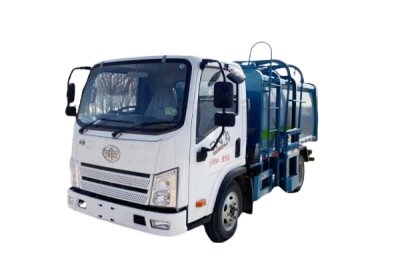
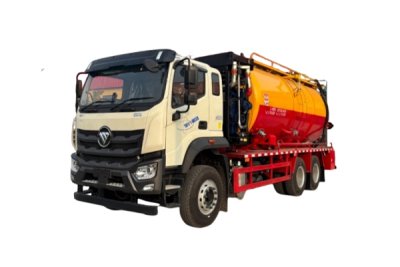
For municipal authorities, industrial facility managers, and sanitation service providers, efficiency is the currency of profitability. When evaluating vacuum trucks—also known as vacuum suction trucks, sewage suction trucks, or sludge tankers—one technical specification stands above all others in predicting job site productivity: the suction rate. Often shrouded in technical jargon, understanding this metric is crucial for making an informed capital investment. This article demystifies the suction rate, exploring its determinants, its impact on operational efficiency, and the evolving market trends that savvy B2B buyers must consider.
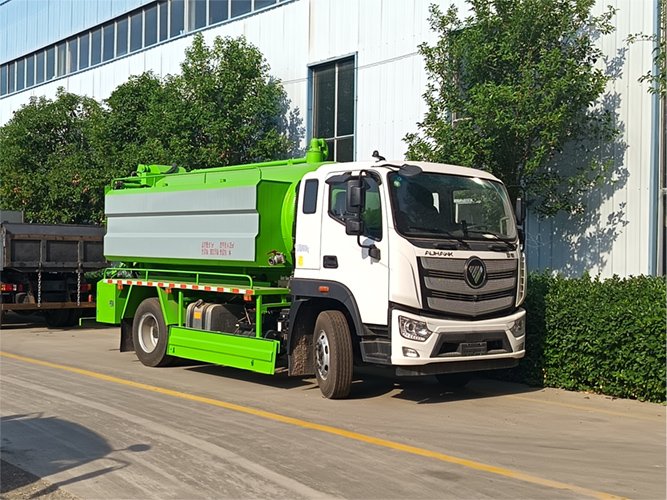
1. Industry Background: The Critical Role of Vacuum Trucks in Modern Infrastructure
Vacuum trucks are the workhorses of modern sanitation and industrial maintenance. They perform the essential, albeit unglamorous, task of transporting liquid and semi-liquid wastes—from domestic septage and faecal sludge to industrial slurry and oil spills—safely and efficiently. Their application spans across:
Municipal Services: Cleaning and maintaining sewer systems, storm drains, and cesspools.
Industrial Maintenance: Handling waste in oil and gas fields, processing plants, and construction sites.
Environmental Remediation: Responding to spills and conducting non-destructive excavation (vacuum excavation).
The global push for improved sanitation, stricter environmental regulations, and aging urban infrastructure is driving steady demand for high-performance industrial cleaning vehicles. In this context, a truck's suction capacity directly translates to faster job completion, lower fuel and labor costs per unit of waste, and a stronger competitive edge for service providers.
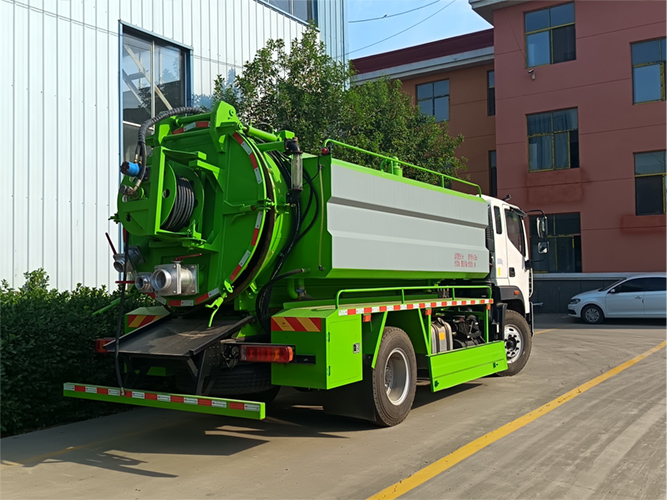
2. Technical Deep Dive: What Exactly is Suction Rate?
The suction rate (or flow rate) refers to the volume of air—and, by extension, the liquid or slurry it carries—that a vacuum pump can move per unit of time. It is a primary indicator of a vacuum truck's operational speed and productivity.
2.1 Core Components Influencing Suction Performance
The system's overall efficiency is governed by several integrated components:
The Vacuum Pump: The Heart of the System
The pump generates the negative pressure (vacuum) that powers the truck. Common types include:
Higher pump power (often measured in horsepower or kW) generally enables a higher suction power.
Rotary Vane Pumps: Widely used for their balance of good vacuum degree and stable air flow rate.
Liquid Ring Pumps: Known for durability and handling wet or saturated air streams, often found in high-capacity units.
Positive Displacement Blowers: Provide very high air volume (CFM) and are excellent for moving large volumes of lighter materials.
Tank Capacity and Design
The sludge tank is not just a container. Its size (typically ranging from 3 to 12 cubic meters for standard trucks) must be matched to the pump's speed. A well-designed, aerodynamically optimized tank with a smooth interior minimizes airflow resistance, allowing for faster filling. Advanced units may feature elliptical or cylindrical designs for structural integrity and better weight distribution.
The Hose and Pipe Network
The diameter, length, and internal smoothness of the suction hose critically affect flow resistance. A larger diameter hose allows for greater material transfer rates, but must be balanced against practicality and the pump's capability.
2.2 Key Metrics: Understanding CFM, Vacuum Degree, and M³/H
Buyers will encounter three interrelated metrics on spec sheets:
Airflow Rate (CFM / m³/min): This is the direct measure of suction rate. It indicates the volume of air the pump can displace. For example, a powerful unit like the Ditch Witch FXT65 offers 1,215 CFM (34.4 m³/min). A higher CFM means faster loading of liquids and light sludges.
Vacuum Degree (kPa or inches Hg): This measures the pump's maximum negative pressure, or "lift." A high ultimate vacuum (e.g., -98 kPa) is crucial for lifting heavy, viscous materials like dense sludge or sand from significant depths (often 7 meters or more).
Effective Pumping Rate (m³/h): This is the practical outcome—the actual volume of liquid waste pumped per hour. This rate varies dramatically with material viscosity. For instance, a truck may handle 60-80 m³/h of thin污水 (wastewater) but only 8-30 m³/h when producing clean, filtered water from a separation process.
The Perfect Balance: A high airflow rate (CFM) ensures speed with fluid materials, while a strong vacuum degree ensures power for thick sludges. The best trucks optimize both for versatile performance.
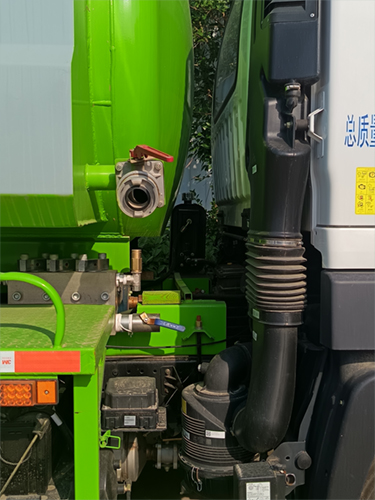
3. Market Data and Application-Specific Selection
Selecting the right suction rate is not about choosing the highest number; it's about matching the spec to the primary application.
Application
Typical Waste Type
Key Suction Rate Priority
Recommended Specification Focus
|
|
|
|
Municipal Sewage & Septage | Medium-viscosity sludge, water | High CFM for faster turnover | CFM >2,500; Tank 8-12 m³; Vacuum ~ -80 kPa |
Industrial Slurry & Solids | Dense, abrasive mixtures | High Vacuum Degree for lift | Vacuum > -90 kPa; Robust pump design |
Liquid Waste / Spill Recovery | Oil, water, thin liquids | Maximum CFM for speed | Highest available CFM; Large hose diameter |
Vacuum Excavation | Soil, slurry, rocks | Balanced High CFM & Vacuum | Units like FXT65; 1,200+ CFM, -85+ kPa |
Market Trend: There is a growing demand for multi-functional vacuum trucks that integrate high-pressure water jetting systems (for cutting and fluidizing compacted waste) with powerful vacuum units. This "clean-and-suction" combo drastically improves efficiency on complex jobs like pipe dredging and septic tank cleaning.
4. FAQ: Answering Common Buyer Questions
Q1: Is a higher CFM always better?
Not necessarily. A CFM that is too high for a small tank can cause excessive turbulence and premature filter loading. Match the CFM to your typical job: high-volume liquid transfer jobs demand high CFM, while dense sludge jobs benefit more from a strong vacuum degree and moderate, sustained CFM.
Q2: How important is the "maximum suction lift" specification?
It is critical if you work with deep cesspools, settling ponds, or need to lift material from significant vertical distances. This spec, measured in meters, is directly related to the pump's vacuum degree. Ensure it exceeds the deepest conditions you regularly encounter.
Q3: What other factors should I consider alongside suction rate?
Tank Material & Corrosion Resistance: Critical for handling chemical or saltwater wastes.
Safety Systems: Automatic overflow protection valves are essential to prevent pump damage.
Chassis and Mobility: Ensure the truck's size and axle configuration are legal and practical for your local roads and job sites.
Emission Standards: Comply with local regulations (e.g., China National VI, Euro VI).
Q4: How do I verify the manufacturer's suction rate claims?
Request certified test reports based on recognized industry standards, such as the Chinese group standard T/CCMS 003-2024 "Vacuum suction truck—Test methods". Reputable manufacturers conduct and share these performance tests.
5. Conclusion and Professional Call to Action
The suction rate of a vacuum truck is far more than a number on a brochure; it is the definitive benchmark of its operational capability and return on investment. In a competitive market where time is money, investing in a truck with a correctly specified and robust vacuum pumping system is the surest path to enhanced sewage treatment efficiency and business growth.
Ready to optimize your operations with precision-engineered equipment?
Contact our team of specialists today. Provide us with the specific details of your primary applications—whether for municipal sludge handling, industrial waste recovery, or septic system maintenance—and we will engineer a vacuum suction truck solution with the ideal suction capacity, tank volume, and chassis configuration to maximize your productivity and profitability.