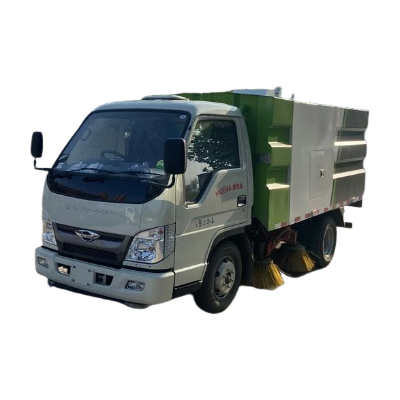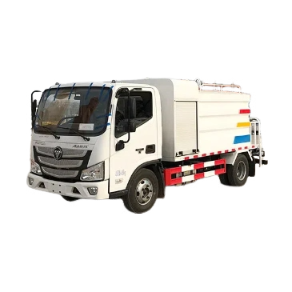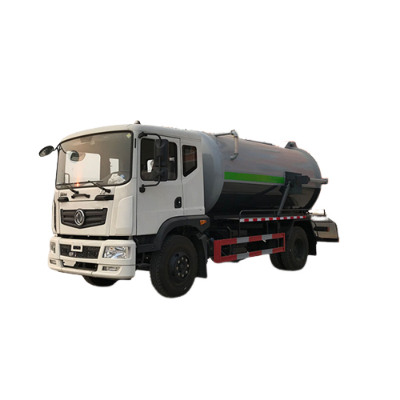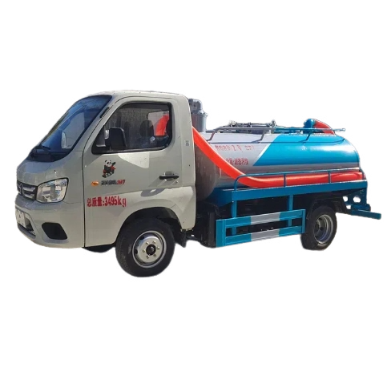
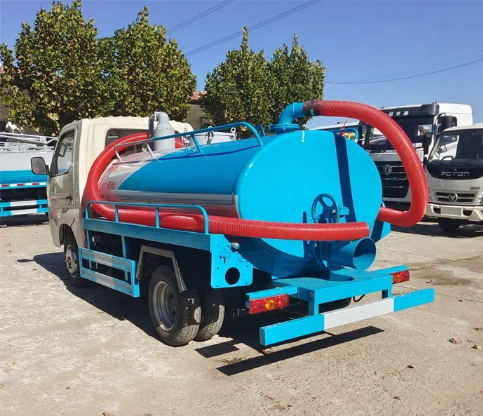
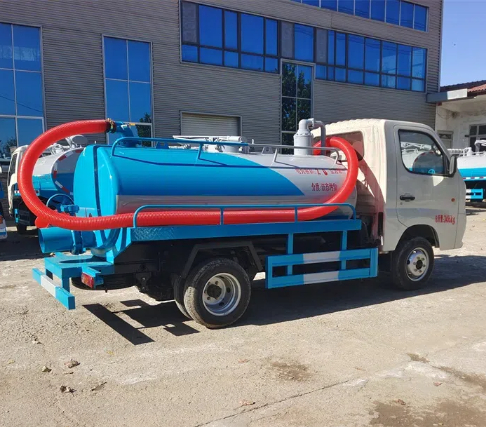
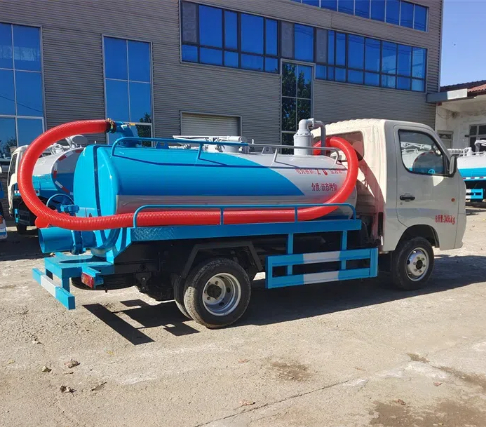
Honey Wagon
1. Space-Efficient Design
Featuring a compact body and an ergonomically designed oval fuel tank, the truck achieves an optimal balance between operational capacity and road maneuverability, enabling access to confined urban and residential sites with enhanced visual appeal.
2. Optimized Structural Integrity
The integration of an oval-shaped fuel tank contributes to a lower center of gravity and improved structural strength, ensuring stable transportation and safer handling on varied terrains.
3. Independent Functional System
Equipped with a self-contained hydraulic and vacuum system, the truck operates independently of external power sources, providing reliable performance in remote or off-grid locations.
4. User-Friendly Operation
Intuitive controls and a logically arranged interface allow operators to manage suction, discharge, and safety functions with minimal training, reducing operational complexity and human error.
**5. Reliable Performance in Demanding Conditions
Engineered for consistent high-efficiency suction and robust hydraulic functions, the system maintains stable performance across diverse waste types—from liquid slurry to semi-solid sludge.
6. Low Maintenance & High Durability
Built with modular components and easily accessible service points, the truck simplifies routine inspections and repairs, ensuring extended service life and reduced lifecycle costs.
Precautions for choosing a gasoline suction truck:
1. Pay attention to the quality of the board, vacuum sealing, and poor materials can easily
cause deformation of the tank body.
2. Selection of vacuum kit, pressure bearing capacity, and perception of temperature difference.
The first domestic kit to promote the Weilong series products.
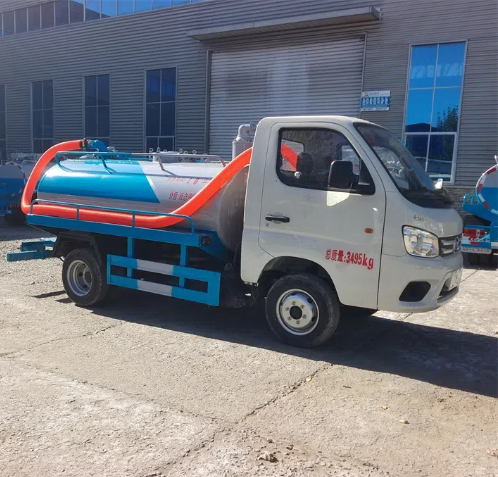
3. The selection of the rear can cover should be based on the local working environment, temperature
difference, and other factors.
4. The power horsepower size, as well as diesel suction trucks, can be selected according to user needs.
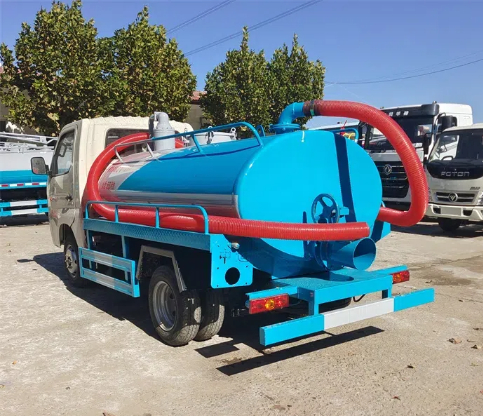
product details:
【Technical parameters of the entire vehicle】 | |||
Product trademark | Xiangnongda brand | Announcement batch | 342 |
Product Name | Product model | SGW5035GXEEQ6 | |
Total mass (Kg) | 3495 | Tank volume (m3) | 2.13 |
Rated load capacity (Kg) | 1625 | External dimensions (mm) | 4800×1800×1950 |
Curb weight (Kg) | 1740 | Maximum speed (km/h) | 100 |
Cab capacity (persons) | 2 | Axle load (Kg) | 1300/2195 |
Approach Angle/Departure Angle (degrees) | 21/17,15/17,26/17 | Front/rear suspension (mm) | 1190/910,1120/980,545/1555 |
remarks | This vehicle is used for the collection and cleaning of feces and sewage, mainly equipped with tanks and pumps. Transport medium: liquid sewage, medium density: 800 kg/cubic meter. Effective volume of tank: 2.13 cubic meters. Tank size is (length x long axis x short axis) (mm): 2350 x 1350 x 1000. It is only equipped with a 2700mm wheelbase and LJ4A15Q6 engine model ABS model and manufacturer: APG3550500A, Zhejiang Asia Pacific Electromechanical Co., Ltd; ABS/ASR-12V-4S/4M, Xiangyang Dongfeng Longcheng Machinery Co., Ltd. Optional cab with chassis | ||
【Chassis Technical Parameters】 | |||
Chassis Model | EQ1035SJ16QC | Chassis name | Light duty truck chassis |
Trademark name | Dongfeng brand | manufacturing enterprise | Dongfeng Motor Corporation Limited |
Number of axes | 2 | Number of tires | 6,4 |
Wheelbase (mm) | 2600,2800,3000,3200,2700,3300,2850,2900,3180,3600 | ||
Tire specifications | 175R14LT 8PR,185R15LT 8PR,185R14LT 8PR | ||
Number of steel plate springs | 3/5,6/7,9/8+4,3/5+2 | Front wheel base (mm) | 1369,1400,1434 |
Fuel type | gasoline | Rear wheel base (mm) | 1214,1314,1242,1342,1355 |
Emission standards | GB18352.6-2016 National VI | ||
Engine model | Engine manufacturing enterprises | Emissions(ml) | Power (Kw) |
DAM16KLQ LJ4A15Q6 LJ4A16QG | Harbin Dong'an Automotive Power Co., Ltd Liuzhou Wuling Liuji Power Co., Ltd Liuzhou Wuling Liuji Power Co., Ltd | 1597 1499 1590 | 90 83 91 |
If you encounter problems such as heavy workload, limited supplier resources, or difficulty in inquiring about
materials for gasoline suction trucks, you can contact us!
product FAQs
1. Q: What materials are used in the tank construction, and how do you ensure durability against deformation?
A: The tank is constructed from high‑strength, corrosion‑resistant carbon steel with reinforced longitudinal and circumferential ribs. All seams are robot‑welded and X‑ray inspected to guarantee vacuum integrity and prevent deformation under full load or continuous operation.
2. Q: What vacuum system is installed, and what is its pressure‑bearing and temperature‑tolerance range?
A: The truck is equipped with a Weilong‑series rotary‑vane vacuum pump, providing a sustained vacuum level up to ‑30 kPa. The system operates reliably in ambient temperatures from ‑20°C to 50°C, with all seals and hoses rated for thermal cycling and pressure fluctuations.
3. Q: How is the rear cover designed to adapt to different climates and working conditions?
A: The rear cover is fabricated from cold‑rolled steel with a silicone‑rubber compression gasket. It can be optionally upgraded to a frost‑resistant insulated cover or a quick‑lock aluminum cover for extreme temperatures or frequent‑access environments.
4. Q: What power options are available, and can I choose between diesel and gasoline engines?
A: The standard configuration uses a Euro V/China VI‑compliant diesel engine (e.g., 120 HP). Gasoline‑engine variants are available upon request, with horsepower options ranging from 100‑150 HP to match specific duty cycles and regional fuel preferences.
5. Q: How do you verify the vacuum sealing performance of the complete system?
A: Every unit undergoes a 30‑minute vacuum‑hold test at maximum rated vacuum. The pressure drop must not exceed 5% during the test, ensuring leak‑free performance of the tank, valves, piping, and hose connections.
6. Q: What safety features are included to handle over‑pressure or unexpected blockages?
A: The system includes an automatic pressure‑relief valve, a vacuum‑breaker valve, and a cyclone separator that prevents solid debris from entering the pump. An optional pressure‑sensor alarm can be added to warn the operator of abnormal conditions.
7. Q: Can the truck handle viscous or semi‑solid waste without clogging?
A: Yes. The pump inlet is protected by a removable coarse filter, and the suction hose is a smooth‑bore, abrasion‑resistant type with a minimum 4‑inch diameter. An optional water‑jetting ring can be installed to fluidize compacted materials before suction.
8. Q: What maintenance is required for the vacuum kit, and are spare parts readily available?
A: Routine maintenance includes checking the pump‑oil level, cleaning/replacing the air filter, and inspecting the separator vessels. All wear parts (vanes, seals, gaskets) are standardized and stocked for prompt shipment worldwide.
9. Q: Is the chassis specifically reinforced for vacuum‑truck duty?
A: The chassis is a factory‑reinforced variant with upgraded suspension (leaf springs + shocks), a heavy‑duty rear axle, and a reinforced frame section where the tank is mounted. This ensures stability and longevity under cyclical loading.
10. Q: Can the truck be customized for specialized applications, such as septic‑truck service or industrial waste collection?
A: Absolutely. We offer application‑specific configurations: septic‑service packages include larger‑diameter hose reels and odor‑control systems; industrial packages may include chemical‑resistant tank linings, explosion‑proof fittings, or ATEX‑rated components.
We have dedicated personnel responsible for one-on-one communication with you!
Welcome to consult!