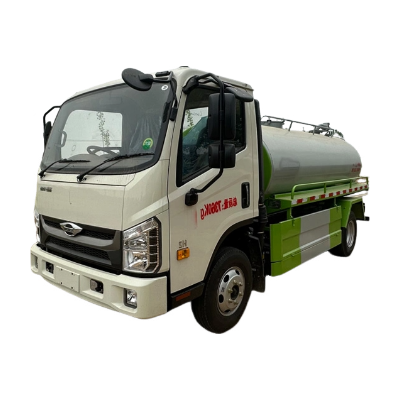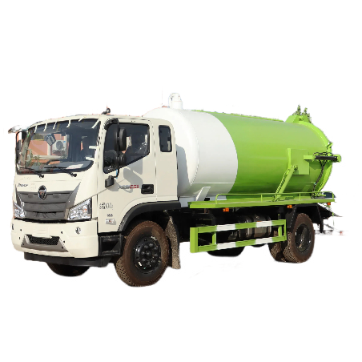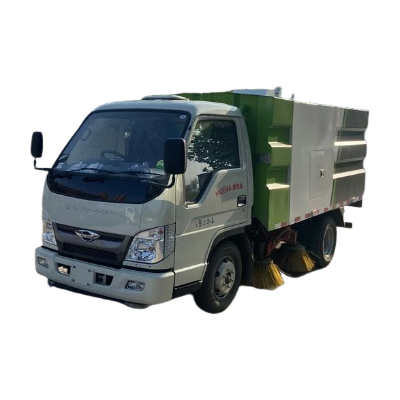
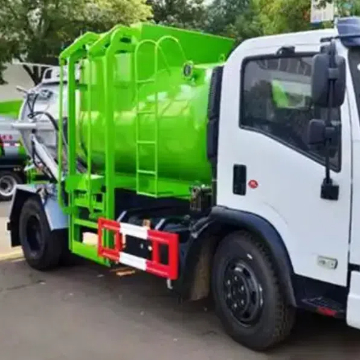
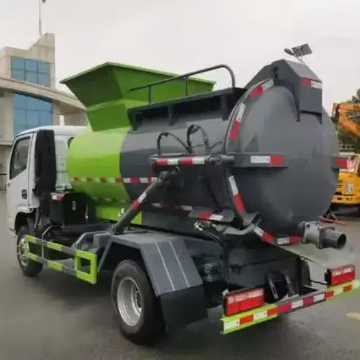
Kitchen Garbage Truck
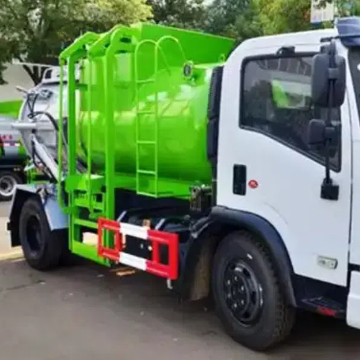
1. Aesthetic and Spill-Proof Design with Feeding Box Cover
The upper part of the tank is equipped with a specially designed feeding box cover, which not only enhances the overall aesthetic appearance of the vehicle but also effectively prevents garbage from spilling during the loading process. This feature ensures a clean operating environment and reduces the need for manual cleanup.
2. Side-Mounted Lifting Mechanism for Reduced Labor Intensity
A hydraulic lifting mechanism is installed on the side of the tank, enabling automated bin lifting and emptying. This significantly reduces the physical workload for operators, allowing for faster collection cycles and improved ergonomic safety during daily operations.
3. Cab-Controlled Hydraulic Rear Door for Operator Convenience
A hydraulic lifting device at the rear of the tank allows operators to open and close the rear door directly from the cab during unloading. This eliminates the need for manual handling, speeds up the discharge process, and protects workers from exposure to waste materials and unfavorable weather.
4. Compact 5 Cubic Meter Capacity with High Maneuverability
With a 5 cubic meter tank, this food waste truck strikes an ideal balance between payload capacity and compact dimensions. It is perfectly suited for urban routes, including narrow streets, restaurants, and hotel service areas where space is limited but collection efficiency cannot be compromised.
5. Fully Enclosed Operation for Environmental Compliance
The combination of the feeding box cover and sealed tank design ensures that the entire collection and transportation process remains fully enclosed. This prevents odor emission and liquid leakage, helping fleet operators meet strict environmental regulations and maintain community hygiene standards.
6. Durable Hydraulic System for Reliable Long-Term Performance
Built with high-quality hydraulic components, the lifting and unloading mechanisms are engineered for heavy-duty, daily use. The system requires minimal maintenance while delivering consistent, reliable performance, reducing downtime and total cost of ownership for waste management fleets.
5 Cubic Food Waste Truck: Advanced Kitchen Waste Collection Solution
Product Overview
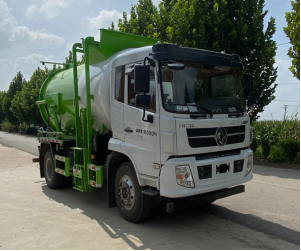
The 5 Cubic Food Waste Truck represents a sophisticated advancement in specialized waste collection technology, engineered specifically to address the complex challenges of kitchen waste management. Also known as swill trucks, restaurant waste trucks, or kitchen garbage trucks, this specialized vehicle is designed for collecting and transporting household food waste, commercial kitchen swill, and urban organic waste materials . With its advanced solid-liquid separation system and automated operation, this food waste collection truck delivers exceptional performance for hotels, restaurants, canteens, schools, and other institutional food service operations, while significantly improving urban sanitation environments through efficient and hygienic waste transportation.
Key Features and Advantages
Advanced Conveyor-Based Loading System
Automated Swill Collection Mechanism
The 5 cubic food waste truck employs an innovative operation method that revolutionizes kitchen waste collection. The vehicle slowly transports buckets of "swill" through a specialized conveyor belt system, gently lifting and pouring the contents into the carriage at the top of the vehicle. The carriage configuration offers flexibility, available as either a box body or tank body design to accommodate different waste characteristics and operational requirements. This automated approach eliminates manual lifting, reduces worker fatigue, and accelerates collection cycles .
Versatile Bin Compatibility
Each food service unit sorts its waste into standard 120-liter or 240-liter plastic garbage bins, which are then automatically emptied into the tank by the garbage truck's hydraulic bin lifting device . This standardized approach ensures seamless integration with existing waste collection infrastructure across municipalities and commercial operations, providing wide applicability and operational flexibility.
Powerful Solid-Liquid Separation Technology
Push Plate Compression System
Once deposited into the carriage, the kitchen waste undergoes sophisticated processing through a powerful push plate mechanism. The garbage is forcefully pushed and compressed, achieving effective separation of solid and liquid components. This solid-liquid separation technology represents a critical advancement in food waste management, as kitchen waste contains exceptionally high moisture content that can lead to rapid decomposition, odor generation, and environmental pollution if not properly contained .
Dual-Compartment Storage Design
The separated liquids drain into a dedicated sewage tank located at the bottom of the tank body, featuring a cleverly designed configuration with raised ends and a lowered center section. This engineering ensures complete drainage through the lowest point, preventing liquid accumulation that could lead to odor development or corrosion . Simultaneously, the solid garbage undergoes compression within the tank body, significantly reducing its volume and maximizing effective payload capacity. This process repeats continuously until the vehicle reaches capacity, at which point it transports the collected material to kitchen waste resource optimization treatment facilities.
Comprehensive Environmental Protection
Superior Sealing Performance
The food waste collection truck incorporates multiple sealing systems to prevent environmental contamination. The tank features a feeding box cover on its upper portion, which serves dual purposes—enhancing the vehicle's aesthetic appearance while effectively preventing garbage spillage during loading operations . Additionally, the interface between the garbage bin and rear door assembly utilizes specially reinforced rubber strips, creating an impenetrable seal that guarantees no sewage leakage during transportation and effectively eliminates odor emissions .
Large Capacity Anti-Seepage Sewage Tank
Recognizing that food waste leachate can be highly corrosive and environmentally damaging, the vehicle is equipped with a generously sized sewage tank featuring anti-seepage construction . This system safely contains separated liquids throughout the transport process, preventing contaminated runoff from escaping onto roadways and ensuring compliance with increasingly stringent environmental regulations.
Operator-Focused Design
Side-Mounted Hydraulic Lifting Mechanism
A hydraulic lifting mechanism installed on the side of the tank dramatically reduces operator workload. This automated system handles the heavy lifting of fully loaded waste bins, protecting workers from physical strain and potential injury while accelerating the collection process . The mechanism includes bin locking features that ensure safe and reliable handling throughout the loading cycle.
Cab-Controlled Rear Door Operation
The rear of the tank is equipped with a hydraulic lifting device that represents a significant advancement in operator convenience and safety. This system allows operators to open and close the rear door directly from the cab during unloading operations, eliminating the need to exit the vehicle in potentially hazardous conditions or inclement weather . This feature optimizes the working environment while accelerating discharge procedures at treatment facilities.
【Technical parameters of the entire vehicle】 | |||
Product trademark | Xiangnongda brand | Announcement Batch | 348 |
Product Name | Kitchen waste truck | Product model | SGW5160TCAEQ6 |
Total mass (Kg) | 16000 | Tank volume (m3) | |
Rated load capacity (Kg) | 8805,8305 | Dimensions (mm) | 7100×2550×3500 |
Curb weight (Kg) | 7000,7500 | Maximum speed (Km/h) | 89 |
Cab capacity (persons) | 3 | Axle load (Kg) | 5600/10400 |
Approach Angle/Departure Angle (degrees) | 20/14 | Front suspension/rear suspension (mm) | 1280/1870,1455/1695 |
remarks | The main specialized equipment of the vehicle includes a side mounted kitchen waste bin lifting structure and a garbage compartment, mainly used for the collection and transportation of kitchen waste. The side and rear protection materials are both Q235, and the connection method is welding. The cross-sectional size of the rear protection is 120mm × 60mm, with a height of 475mm above the ground. Only a 3950mm wheelbase is installed ABS model: ABS/ASR-24V-4S/4M, manufacturer: Xiangyang Dongfeng Longcheng Machinery Co., Ltd. This model can be optionally equipped with an ETC onboard device | ||
【Chassis Technical Parameters】 | |||
Chassis Model | EQ1165S8EDF | Chassis name | Truck chassis |
Trademark name | Dongfeng brand | manufacturing enterprise | Dongfeng Motor Corporation Limited |
Number of axes | 2 | Number of tires | 6 |
Wheelbase (mm) | 3308,3400,3600,3700,3800,3950,4050,3650,4500,4700,5200,5600,4200,4400 | ||
Tire specifications | 9.00R20 | ||
Number of steel plate springs | 12/12+9,8/10+7 | Front wheel base (mm) | 1745,1805,1825,1940,1920 |
Fuel type | diesel oil | Rear wheel base (mm) | 1630,1650,1800,1750,1710 |
Emission standards | GB17691-2018 National VI | ||
Engine model | Engine manufacturing enterprises | Emissions(ml) | Power (Kw) |
D30TCIF1 D45TCIF1 NV30-C6D YCS04180-68 D40TCIF1 CA4DD2-18E6-30 | Kunming Yunnei Power Co., Ltd Kunming Yunnei Power Co., Ltd Dongfeng Chaoyang Chaochai Power Co., Ltd Guangxi Yuchai Machinery Co., Ltd Kunming Yunnei Power Co., Ltd China FAW Group Co., Ltd | 2977 4461 2968 4156 4052 3230 | 125 162 120 132 135 132 |
Diverse Configuration Options
Four Specialized Kitchen Waste Truck Types
The 5 cubic food waste truck is available in four distinct configurations based on different functional characteristics, allowing customers to select the optimal solution for their specific application requirements:
Box Type Kitchen Waste Trucks: This common configuration employs a box-type structure with a large garbage bin volume capable of accommodating substantial waste quantities. It represents the standard choice for general kitchen waste collection applications where proven reliability and straightforward operation are priorities .
Vacuum Type Kitchen Waste Trucks: Designed for operations involving large waste pits or centralized collection points, this configuration utilizes vacuum suction to directly draw kitchen waste into the tank, offering exceptional efficiency for high-volume applications.
Crushing Type Kitchen Waste Trucks: Incorporating size reduction technology, this variant processes waste through crushing mechanisms that further reduce volume and prepare material for subsequent treatment processes.
Cutting Board Type Kitchen Waste Trucks: Specialized configurations designed to handle specific waste characteristics, offering tailored solutions for unique operational requirements.
Robust Construction and Reliability
Durable Hydraulic Systems
The food waste collection vehicle features comprehensive hydraulic systems comprising pumps, hydraulic valves, sequence valves, and various functional hydraulic cylinders connected through high and low-pressure pipelines . Critical components can be selected from original imported sources, ensuring exceptional work reliability and operational safety throughout the vehicle's service life.
Corrosion-Resistant Materials
Given that food waste leachate can be highly corrosive, the tank can be constructed from corrosion-resistant materials including stainless steel options . This attention to material selection fundamentally guarantees vehicle performance and extends operational longevity, protecting the investment of fleet operators.
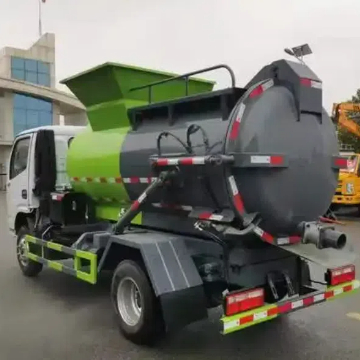
Application Scenarios
Restaurant and Hotel Food Waste Collection
The 5 cubic food waste truck excels in commercial kitchen environments, efficiently collecting food preparation waste, plate scrapings, and expired ingredients. Each establishment sorts its waste into standard bins, which are then automatically emptied by the truck's lifting mechanism, streamlining the collection process for busy commercial districts.
Institutional Cafeteria Operations
Universities, hospitals, corporate campuses, and school canteens generate substantial daily food waste requiring reliable collection. The vehicle's capacity and automated operation deliver the efficiency necessary for institutional routes with multiple collection points and consistent waste generation patterns.
Municipal Food Waste Programs
Cities implementing source-separated organic waste collection programs benefit from the truck's versatility and environmental performance. The vehicle's sealed operation prevents odor complaints in residential neighborhoods while its solid-liquid separation capabilities support downstream resource recovery objectives .
Urban Sanitation Improvement
By providing hygienic collection and transportation of kitchen waste, these vehicles contribute significantly to improving the overall urban sanitation environment. They reduce airborne odors from food waste, minimize cockroach and bacterial breeding opportunities, and enhance working conditions for sanitation workers while preventing waste scattering and environmental pollution .
Technical Specifications
Performance Parameters
Effective Tank Volume: 5 cubic meters, achieving up to 90% effective capacity utilization
Tank Material Options: Q235 carbon steel or 304 stainless steel with thickness of 4-6mm
Hydraulic System Maximum Pressure: 16 MPa
Unloading Time: ≤20 seconds
Bin Lifting Cycle: ≤25 seconds for complete lifting and emptying
Rear Door Opening Angle: 70 degrees for efficient discharge
Control Options: Manual, electric, or PLC automatic control systems available
Customization Options
Customers can select from various optional features including:
PLC One-click operation for simplified automated control
304 stainless steel tank construction for enhanced corrosion resistance
Sealed auger discharge systems for contained material handling
Bin weighing functions with data recording and GPS tracking capabilities
Heating systems for operation in cold climates where kitchen waste might freeze
Frequently Asked Questions
Q1: How does the solid-liquid separation system work, and why is it important for kitchen waste collection?
The solid-liquid separation system operates through a powerful push plate that compresses waste against separation screens or within a specially designed tank compartment. As pressure is applied, liquids drain through separation plates into a dedicated sewage tank at the bottom, while solids remain contained and are further compressed to reduce volume . This process is critically important because kitchen waste typically contains extremely high moisture content—often exceeding 80%—which can lead to rapid decomposition, offensive odors, and environmental contamination if not properly managed. Effective separation also reduces transportation weight, maximizes payload capacity, and prepares waste for more efficient downstream processing at resource recovery facilities.
Q2: What types of waste bins are compatible with this food waste collection truck?
The 5 cubic food waste truck is designed to accommodate standard 120-liter and 240-liter plastic garbage bins commonly used in municipal and commercial waste collection systems worldwide . The side-mounted hydraulic lifting mechanism includes bin locking features that ensure secure handling during the entire loading cycle. During the ordering process, we can configure the lifting mechanism to accommodate specific bin types prevalent in your region, ensuring seamless integration with your existing waste collection infrastructure without requiring costly container replacements.
Q3: How does the vehicle prevent odor emissions and liquid leakage during transportation?
The truck employs multiple complementary systems to ensure complete containment. First, the feeding box cover on the upper portion of the tank prevents spillage during loading . Second, specially reinforced rubber strips create an impenetrable seal between the garbage bin and rear door assembly . Third, the large-capacity anti-seepage sewage tank safely contains all separated liquids, preventing contaminated runoff from escaping . Finally, the entire tank structure is sealed, and the hydraulic rear door remains securely locked during transit. Together, these features guarantee no sewage leakage and effectively eliminate odor emissions, ensuring compliance with environmental regulations and community hygiene standards.
Q4: What maintenance requirements should fleet operators expect for this vehicle?
The 5 cubic food waste truck is engineered for durability with minimal maintenance requirements. Key considerations include: regular inspection of hydraulic hoses and fittings for wear; periodic replacement of hydraulic fluid according to manufacturer specifications; cleaning of the tank interior to prevent residue accumulation; inspection and replacement as needed of the rear door sealing strips; and routine chassis maintenance according to the base vehicle manufacturer's recommendations . The use of corrosion-resistant materials and high-quality hydraulic components significantly extends service intervals. For operations in demanding environments, optional features such as tank heating systems or high-pressure cleaning devices can further enhance reliability and ease of maintenance.